Hello, dreamers. I’ve got another busy week ahead of me, with the new novel and a growing number of editing projects. Of course, the biggest project continues to be my new work-in-progress: Neptune 1. Or at least that’s what I’m calling it for now; as I’ve gotten back into the swing of things, I’ve begun rethinking everything, which in this instance I feel is productive. I’m considering renaming the novel, but as that, too, is a work-in-progress, it’s still Neptune 1 for now.
As I’ve continued tearing through this novel, I’ve decided to take a break for a few days to do research. That is to say, I am still working on the new chapter, but more slowly, focusing on research to build an alien biosphere. And on that note, I’ll move on to this week’s WIP Wednesday post: an introduction to the setting of this story.
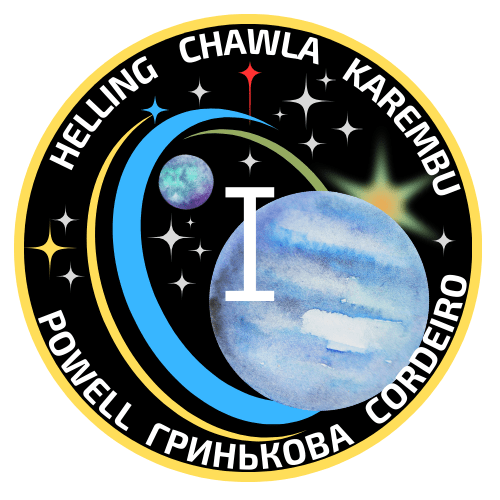
Neptune 1
“Finding life in a completely alien environment is the ultimate ‘what if?’ for our species, right? Like, imagine if things had turned out differently: if the Chicxulub impact didn’t happen, if there was never a ‘Great Dying’. Crazy, huh? Now, imagine if we’d never had dry land. No continents, no islands, not even a sandcastle. What would our world have looked like? An entire biosphere, living and breathing, beneath the waves. No direct sunlight. No clouds, no sky. Coral reefs instead of forests. Schools of fish instead of herds of antelope. To us, it seems so…alien. But to the creatures living in harmony in a place like that, it’s just life. Man…isn’t that wild?”
– Karen Hernandez, Marine Biologist, Neptune 1
First and foremost, Neptune 1 is a story of space exploration, which means strange new worlds. One in particular: an exomoon, covered entirely in a continuous ocean. This moon, eventually dubbed Jann (Arabic for “Paradise”) by Karen Hernandez, is where the best action of the story takes place.
Jann
The largest of eleven moons of the gas giant Zahl, Jann was originally destined to become an ice moon similar to Europa or Enceladus in our solar system. However, gravitational forces from the interaction between the two main stars of Alpha Centauri moved Zahl into the habitable zone of the primary, Rigil Kentaurus: a G-class star similar to our sun. As a result, Jann became a glimpse of what could have been: a moon covered entirely in liquid water.
Though habitable, Jann is very different from Earth in a few key ways. Its significantly smaller size means weaker gravity. As a result, the moon’s oxygen-rich atmosphere is both larger and somewhat thinner than Earth’s. But of course the biggest difference is its surface composition. Having never had dry land, Jann’s biosphere is entirely aquatic. No mammals, no birds, no reptiles or even amphibians. The result is a mature marine ecosystem dominated by various species of fish, including enormous rays and sharks, as well as a diverse range of cephalopods.
The unique geology and weather of Jann, due in part to its relationship with its gas giant, supports thriving marine ecosystems. Due to water being drawn toward the planet-facing hemisphere, the outward hemisphere is relatively shallow, covered by vast kelp forests and expansive coral reefs.
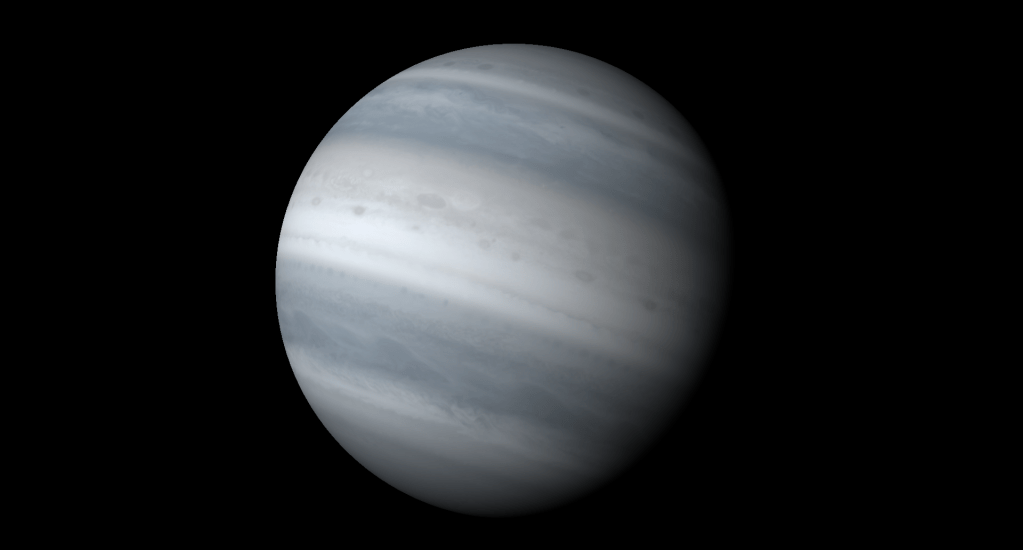
As for the gas giant itself, Zahl is a Sudarsky Class II planet: its location relative to its sun means its clouds are composed mostly of water vapor, leading to bands of gray.
I’m still working out details, including the global topography, and of course the biosphere. But I have a couple fun left turns in store for my crew of brave explorers. Speaking of the crew, of course a great deal of the story takes place aboard the ship they use to reach Alpha Centauri.
DSRV-1 Challenger
The Challenger is the first of a new type of human spacecraft: the Deep Space Reconnaissance Vehicle (DSRV). The DSRV is, in effect, a modern reimagining of the ships of Star Trek: a spacecraft designed to traverse interstellar space, and operate for extended periods without support. But aside from using an Alcubierre (warp) drive to travel between star systems, the Challenger has little in common with the U.S.S. Enterprise.
The Challenger is a kilometer-long spacecraft, propelled at sublight velocities by a VASIMR array: an advanced form of plasma rocket. Crew accommodations and science labs are located within a 200 meter diameter gravity wheel, which spins roughly twice per minute to simulate Earth gravity. While the wheel constitutes the bulk of the ship’s habitable space, the spacecraft includes a number of additional modules, which are a microgravity environment. In addition to a robotics bay, an onboard 3D printing and refining module, and the universal docking module accommodating landers, the ship includes the Command and Control Modules (CCM): a set of four microgravity modules from which the command crew maintains ship functions and guides the spacecraft. These modules are situated halfway down an 800-meter carbon nanotube cable, called the mast, which extends forward from the main hub, ahead of the engines and reactor.
As its intended to operate without support potentially for years, DSRVs like the Challenger feature a number of innovative systems designed for endurance. This includes a supplemental propulsion system featuring a 10 kilometer diameter solar sail, drones capable of harvesting raw materials from interplanetary debris, and a vast hydroponics facility that allows the crew to grow their own food.
In many ways, Neptune 1 is like nothing I’ve written before, featuring a diverse cast of characters and what I believe is a very original premise. I’m eager to see where this story takes me as I write on, and can’t wait to share the results with you. By next week (likely much sooner), I’ll have resumed writing in earnest. I can’t wait to tell you more about where this story goes next. Until then, keep reading, and dare to dream. – MK
 Michael T. Kuester