Today, the first-person shooter is arguably the biggest genre in video gaming. Much of that success can be attributed to Halo. Released in 2001, Halo: Combat Evolved was the prototype of the modern FPS. It combined user-friendly controls and plenty of alien-shooting action with an intriguing plot and eye-catching world design. Since the first game, Halo has grown into an expanding franchise including multiple games, as well as a variety of other media. And its protagonist, the Master Chief, has become one of the most recognizable characters in the history of video games.
It’s unsurprising that Paramount decided to produce a screen adaptation of Halo. In fact, it’s shocking it didn’t happen sooner. The result was the kind of fast-paced, eye-catching, big-budget streaming series viewers have come to expect in modern sci-fi. With a second season on the way next week, let’s take a closer look at the Paramount+ series Halo: the good, the bad, and how it fits in today’s science fiction pantheon.
The Premise
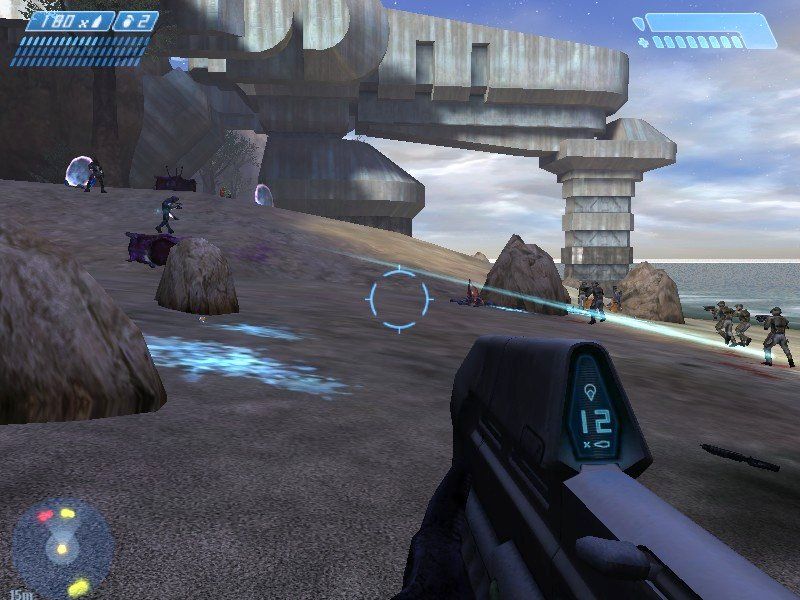
Halo is a story of interstellar warfare set in the 26th century. For the few who may be unaware, the basic plot of Halo involves a war between the forces of humanity (under the auspices of the United Nations Space Command, or UNSC) and the Covenant: an alliance of alien species united by a common religion. The story revolves around John-117: the Master Chief, a technologically and genetically-enhanced super soldier created specifically to fight the Covenant. While various characters appear to aid the Master Chief, his one constant companion is Cortana: a sentient AI designed to aid him in battle.
While Halo and its sequels were praised for their storyline, at the time what set it apart was the simple fact that it had a storyline. Needless to say, first-person shooters generally don’t rely on a deep, character-driven story to attract players. And while fans and critics alike have praised the game’s story, needless to say a TV series requires more than all of two major characters to create drama.
Thus, the show’s creators, some of which were involved in the games’ development, went in a few different directions while adapting it to screen. The series revolves not only around the Master Chief, but also his fellow Spartan super soldiers (who were paid lip-service through most of the games), as well as several other characters (notably Catherine Halsey, and Jacob and Miranda Keyes) who appeared in the games. They also added several new characters, including Makee, a human raised by the Covenant, and Kwan Ha, a girl from the human colony Madrigal.
While the game’s story largely followed the Master Chief’s ceaseless campaign against the Covenant alongside the valiant (if often hapless) UN marines, the series paints a broader, darker picture of humanity in the 26th century. The action is punctuated by drama driven by the Chief rediscovering his past and his humanity, and the increasingly amoral decisions made by the leaders of a species faced with extinction.
The Reaction So Far
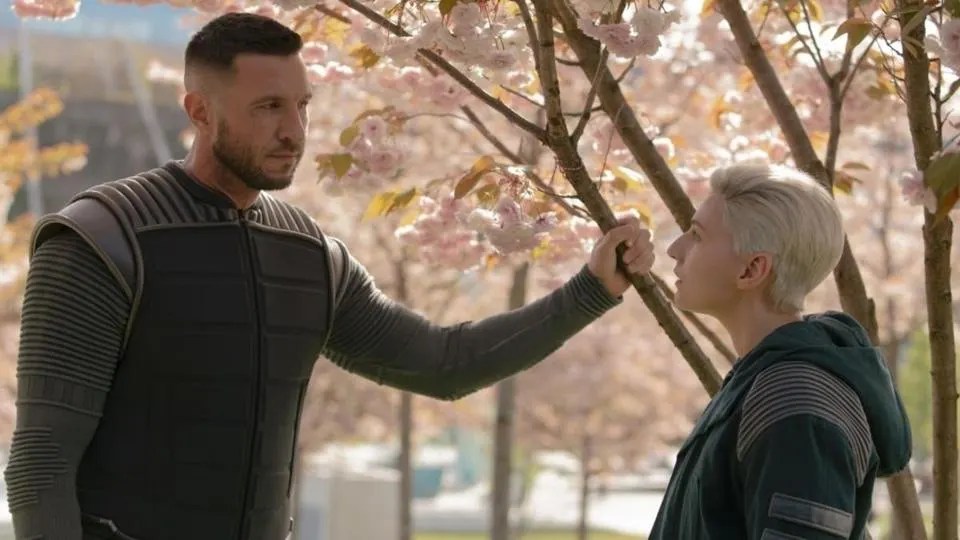
Reviews of Halo from critics have been generally favorable, but mixed. Though many praised the show’s visuals, design, and richer characters, some felt the show attempted to do too much, losing the plot amid various side-stories. From fans, however, the reaction has been more polarized.
Much of the negative response among fans has grown painfully predictable: basically, they wanted Halo, the game, but as a TV series. Master Chief as the stoic, faceless hero, aided by his virtuous marines and the ever-faithful Cortana, fighting the evil aliens non-stop. And they got plenty of that. The action sequences were fantastic and full of fan-friendly callbacks, including period shots from inside the Chief’s helmet (perfectly emulating the view in the game) as well as the anxiety-inducing low-shield alert. But a TV series needs more than fifty minutes of gunfire a week.
Many fans of the game had one major gripe: in the series, the Master Chief removes his helmet, something he never did in the games. In the series, he does it a lot. He does it in the first episode, before the opening credits. To an extent, I can understand their problem with this: I played Halo, and I, too, felt wondering what the Master Chief looked like under his helmet added to his mystique. But those fans are missing the point. The developers of Halo had a clear, publicly-established reason for never showing his face: he was a character in a video game. They avoided showing his face because, until they did, the Master Chief could be anyone. If you were playing the game, the Master Chief could be you.
But a character on a TV series needs a face. He needs a story, an identity, a past to learn from, uncover, or be haunted by. Fans of the games didn’t like that the Chief had a face. They didn’t like that he made jokes. They didn’t like that he enjoyed music, feeling the sun on his face. They definitely didn’t like that he had sex. But all those things were necessary for a character in a television series, because they made him human.
My Take
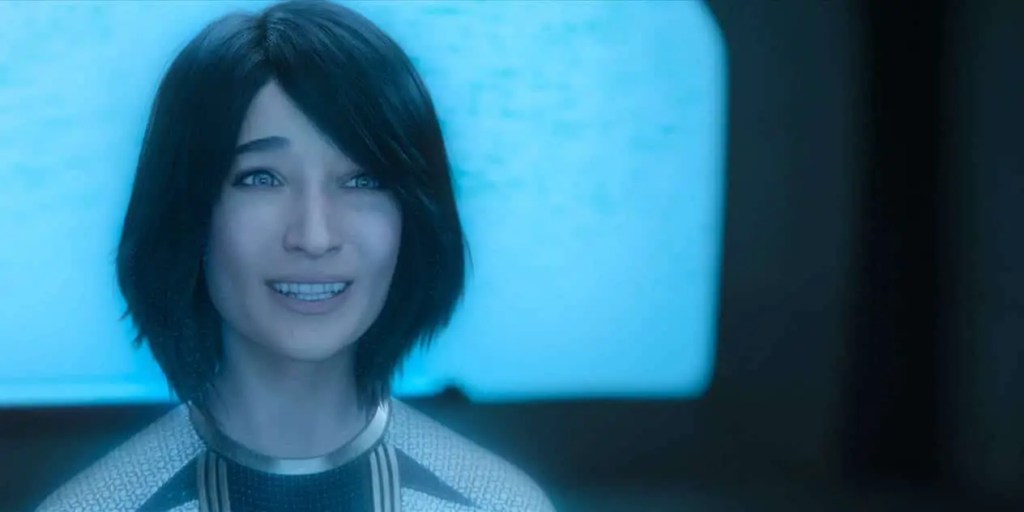
Personally, I thoroughly enjoyed the first season of the series. I say that not only as a fan of science fiction, but also as a fan of Halo. Unlike Netflix’s ill-fated attempt at a live-action Cowboy Bebop, Halo managed to faithfully translate the game’s distinctive look and feel onto screen. But, from a science fiction perspective, that was far from their greatest triumph.
As its game predecessor was for its medium, the series Halo is a masterclass on sci-fi worldbuilding. In the games (certainly the early ones, focused on the war with the Covenant), the morality of the UNSC was never questioned. These were brave men and women fighting a war of survival against a fearsome alien enemy; one that was fighting a holy war driven by religious zeal, which sadly played a little too well to the politics of the games’ era. Humanity was shown as firmly united against the Covenant threat. Most of the game’s intrigue revolved around infighting within the Covenant, and the revelation of dark truths behind the alien race they deified, known as the Forerunners.
But the series shows humanity as anything but united. It shows humans on Earth’s outer colonies being oppressed, many of them so resentful of Earth’s influence that they regard news of the Covenant as propaganda. The UNSC is depicted as a heavy-handed military dictatorship: they violently suppress dissent on the outer colonies, prop up local strongmen, and create super soldiers by abducting children and experimenting on them without their consent. Much of the plot of the first season hinges on the increasingly unethical decisions of the UNSC’s leadership in their desperate struggle against an alien enemy. And as the season progresses, some begin to wonder if the price of preserving humanity is simply too high.
At its heart, science fiction’s value lies in its capacity for social commentary. Sci-fi can ask the questions some of us are simply too afraid to pose. And while Halo is deeply complex, many fans might be too distracted by its departure from the source material to notice the big, underlying question:
Just how much of our humanity are we willing to sacrifice to feel safe? – MK
The second season of the TV series Halo debuts on Thursday, February 8, on Paramount+. The first season is currently available for streaming. Watch for my next “Sci-Fi Reviewed” next month, when I cover the Apple TV series For All Mankind.
 Michael T. Kuester
Pingback: Halo Season 2: Knee-Jerk Reaction | Writing Tomorrow