Hello, dreamers. I’ve got a lot going on, but even with all the bustle, I’ve continued refining my concept for my work-in-progress. Much of my work this week has revolved around character development; notably, I’m still refining my characterization of Karen Hernandez. And until I’ve fleshed her out, it’ll be hard to move on to the supporting characters.
But one thing hasn’t changed, and surely won’t. That’s what I’d like to talk about this week.
Aquarius 1
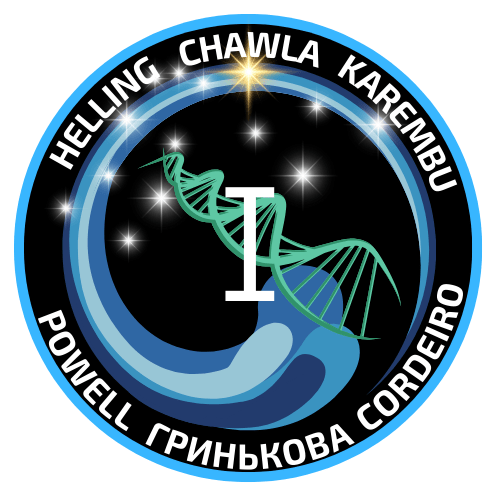
As with most of my Dotiverse works, Aquarius 1 will take place across two main settings: a spacecraft and an alien world. And the alien world is what readers are really going to want to know about. Because I dare say this is going to be unlike anything they’ve ever seen before.
The best introduction I can think of to the moon featured in Aquarius 1 comes from a quote I created:
“Finding life in a completely alien environment is the ultimate ‘what if?’ for our species, right? Like, imagine if things had turned out differently: if the Chicxulub impact didn’t happen, if there was never a ‘Great Dying’. Crazy, huh? Now, imagine if we’d never had dry land. No continents, no islands, not even a sandcastle. What would our world have looked like? An entire biosphere, living and breathing, beneath the waves. No direct sunlight. No clouds, no sky. Coral reefs instead of forests. Schools of fish instead of herds of antelope. To us, it seems so…alien. But to the creatures living in harmony in a place like that, it’s just life. Man…isn’t that wild?”
-Karen Hernandez, Aquarius 1
One of the first big challenges I faced when devising the concept for Aquarius 1 was designing the moon, Jann. As I’ve said in previous posts, Jann is similar to the moons of gas giants in our solar system. But, unlike ours, Jann orbits a planet in the habitable zone. That means its icy crust has completely thawed. Instead, the moon is covered entirely in ocean.
That meant the first big question I had to answer was the question posed by Karen: what would life look like on a moon that had never had dry land?
Devising the base parameters of the moon’s geography and climate was the easy part. But this is a moon that has been habitable nearly as long as our planet. In our terms, that means it would boast a mature biosphere: one where life has been evolving at least as long as it has on Earth. So, how would life have evolved without dry land?
First of all, I realized much of the life we tend to associate with oceans would be absent. On Earth, reptiles, birds, and mammals all evolved by emerging from the oceans and colonizing dry land. Those that now live mostly marine lives didn’t evolve in the ocean; they went back. That means, on a moon that’s never had dry land, no reptiles. No birds. No mammals. So no sea turtles, no penguins or albatross, and no whales, dolphins, or manatees.
I’m sure that for many readers that will be disappointing. I was also disappointed. So was Karen. But science is science. If you want to write hard science fiction, you have to go where the science takes you. And once I realized those more complex forms of life would be absent from Jann, I began devising a completely alien biosphere.
Jann’s biosphere is dominated by fish and cephalopods. There are mollusks, and coral, yes. But most major ecological niches are filled by fish and cephalopods. The moon’s weak gravity means that while many organisms on Jann might be very similar to those on Earth, they would be much, much larger. Corals could display significant vertical growth, perhaps reaching tens of meters in height. There could be rays the size of whales. And if you think giant squid here on Earth are huge, well…
The biosphere of Jann is still a work in progress. I’m still fleshing things out, much as I did years ago for Pioneers. But the showpiece, ultimately, will relate to intelligence. On Earth, intelligent life (read: us) evolved in the harshest environments on our planet. The earliest civilizations evolved much the same way. Surviving in barren places like deserts and frozen tundra is hard. The climate is hostile. Food and water are scarce. As I said frequently in Pioneers, evolution is merely life responding to its environment. Natural selection favors traits that improve a species’ chance of survival. And in the harshest environments, intelligence is often the difference between life and death.
And there are few more inhospitable climates than the bottom of an ocean.
Over time, a picture of life on Jann has emerged, one that very much conforms to Karen’s predictions above. An entire world of creatures living peacefully beneath the waves. As they study Jann, Karen will make some truly incredible discoveries. And in the end, the greatest of those discoveries will challenge human preconceptions of intelligence. I can’t wait to see where this story takes me. Until next time, dare to dream. – MK
 Michael T. Kuester