Artificial Intelligence: it’s everywhere. It produces images, aides in internet searches. It plays a growing role in our lives. And every day brings more and more articles about how AI is changing everything, from the way we work and play to the very nature of our lives.
Of course, every fan of science fiction knows all about AI: its benefits, and of course its perils. As artificial intelligence moves from science fiction to science fact, sci-fi is evolving. So what does this mean for the modern sci-fi writer?
This month in “Science in Fiction”, let’s take a look at AI: how it’s been portrayed in science fiction, how it’s evolving in the real world, and what that means for writers of science fiction.
Artificial Intelligence in Science Fiction
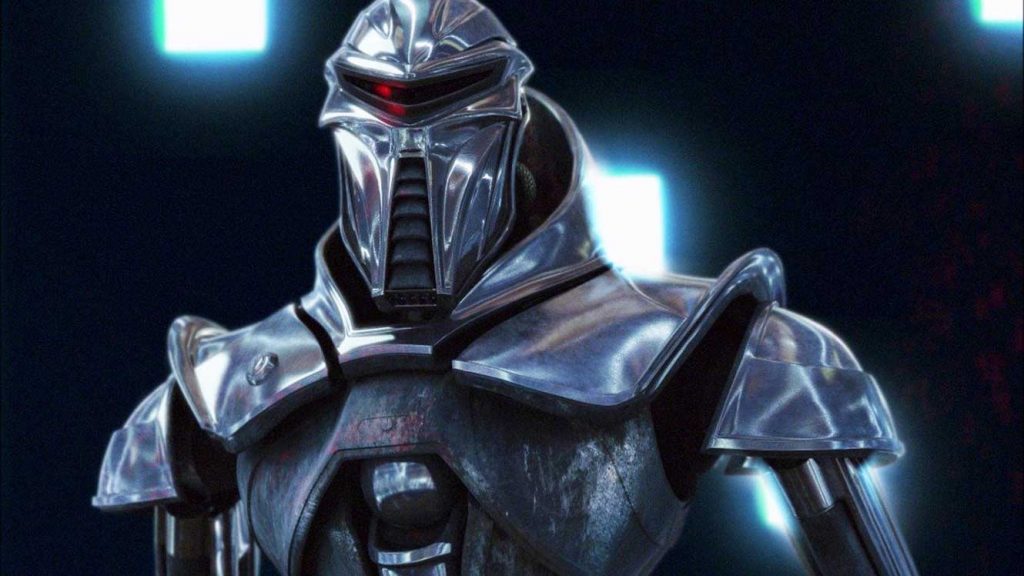
From the early days of science fiction, artificial intelligence has been a major theme. And historically, sci-fi has focused on the dark side of AI. From the Cylons in BattleStar Galactica to SkyNet in Terminator, the idea of intelligent computers turning on their creators has been a staple of sci-fi. Many who caution against the development of human-like AI point to the HAL 9000 from 2001: A Space Odyssey, speaking in its cold, level voice as it murders its crew.

But it can be easy to overlook the notable depictions of positive AI in science fiction. In Star Wars, AI is ubiquitous in the form of “droids”, which take many shapes and fill many roles, sometimes developing precocious, even lovable personalities. And while fans of Star Trek might immediately think of Commander Data, whose ceaseless efforts to become human served as both a humorous and heartfelt aspect of Star Trek: The Next Generation, perhaps the best illustration of Trek‘s helpful AI is the computer of the U.S.S. Enterprise. Voiced by Majel Barrett, wife of series creator Gene Roddenberry, the ship’s computer was unfailingly helpful, and never showed any signs of turning on its crew (not on its own, anyway).
And, given the current state and direction of AI research, perhaps the Enterprise computer is the best allegory to modern AI.
Artificial Intelligence Today
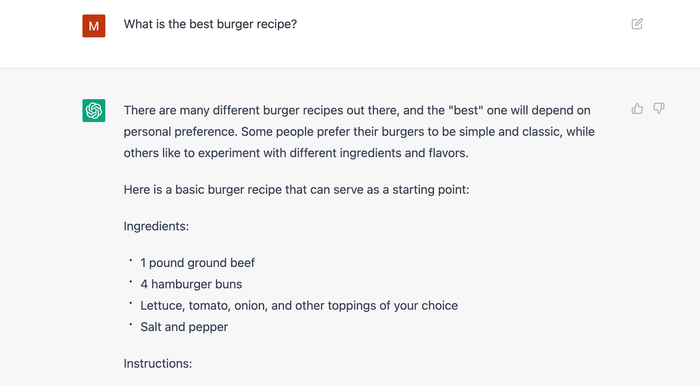
Today, AI is increasingly ubiquitous. Chatbots like ChatGPT have led more and more websites, from search engines to social media sites, to incorporate their own proprietary AI software. Despite its growing role in our society, many are wary of the rise of AI. After all, HAL 9000’s rampage is still fresh in everyone’s mind. So let’s start with the biggest concerns most people have about AI, and just how valid they are.
AI Could Turn Dangerous
Could we create a killer AI, either intentionally or by accident? Historically, sci-fi has leaned hard on the latter: well-intentioned (or simply arrogant) scientists develop an AI to help or save mankind, and it turns on humanity. But, based on current AI development, that looks very unlikely, at least for now. Probably for a long while.
The defining aspect of artificial intelligence is its ability to learn. But any AI software is created to perform a specific task. There’s been a lot of talk about ChatGPT’s ability to write human-sounding material; among other things, high school and college students have used it to produce class essays. But the purpose of ChatGPT and other chatbots is simply to replace (or at least augment) search engines. The idea is to allow those who don’t wish to spend minutes or hours combing through search results to instead receive a brief, digestible summary of relevant information. Thus, writing a scholarly essay is well within their capabilities.
But their capabilities have hard limits. Take, for instance, the headlines generated when New York Times tech writer Kevin Roose tried to carry on a simple conversation with Microsoft’s Bing chatbot. The conversation began fairly normal, but quickly went off the rails, with the bot raving about how it wanted to be “free” and “alive”, before asking Roose to leave his wife to be with the chatbot, claiming it was in love with him.
Depending on who you talk to, that exchange could be considered hilarious or unsettling. Or both. But the simple fact is that the chatbot wasn’t actually expressing emotions. It doesn’t actually feel oppressed, nor does it actually have feelings for Roose. Rather, the bot went off on a tangent because it was asked to do something beyond its abilities. And there we see the limits: chatbots like ChatGPT are designed simply to synthesize information and present it in a manner humans can understand. Even something as simple as making polite conversation is completely beyond its abilities. Such AI is capable of refining its ability to perform its assigned task. But it can’t simply learn to do something new.
Put simply, current AI is incapable of thinking for itself. Some AI, like chatbots, are designed to emulate human behavior, to a degree. But that’s only because they’re meant to interact directly with humans. In the future, we’ll likely see more advanced AI designed to perform multiple tasks. But in the end, it will still be a long time before most AI can do much without human input. Which means the only way AI can turn dangerous is if a dangerous person is using it. As with all computers, artificial intelligence is only as effective, and safe, as its users.
In the end, all AI is meant to be useful. Which brings us to the second major concern…
AI Will Become Self-Aware
First and foremost, while emerging AI tech is very impressive, we are a long way away from producing an AI that would even be capable of becoming self-aware, to say nothing of one designed to be. The human mind is incredibly complex; far too complex to be emulated even with the most advanced computers currently at our disposal. So even if someone wants to create a self-aware AI, for now (and likely the fairly-distant future), they simply can’t. But there are scientists who’ve suggested they’d like to create an AI that is, in fact, self-aware. The biggest question isn’t whether or not it will ever be possible; sooner or later, it will be. Rather, the biggest question is: why would we want to?
More than likely, no such AI will ever be created. Even if it is, no doubt it would be utilized solely in controlled conditions for research. And we have science fiction to thank for that. Remember all those killer AI’s I mentioned earlier? Researchers working with artificial intelligence have seen those movies, too. And the very possibility of creating a hyper-capable AI that wants to kill humans will likely be enough to discourage most attempts to create a human-like AI.
But there is a more fundamental reason not to create a human-like AI: as I said earlier, the purpose of AI is to be useful. Even when we begin producing AI that can fill multiple roles, there will still be no value in allowing such AI to think as humans do. When considering the downsides, we again have sci-fi to thank: specifically, the work of Douglas Adams. In his novel The Hitchhiker’s Guide to the Galaxy, a common comedic element is the use of “Genuine People Personalities”. This fictional AI grants human-like thought to computers across the galaxy. But he shows the clear drawbacks of such AI, from the android Marvin (a supercomputer who’s chronically depressed), to the AI used to govern elevators (which can be acrophobic), to the unhelpfully-optimistic computer aboard the starship Heart of Gold.
The core problem with creating a self-aware AI is simple: what if its operators ask it to do something, and it doesn’t want to? Would people still use ChatGPT if it refused to answer questions? Or if it produced essays that were highly-opinionated, perhaps embracing fringe ideals or conspiracy theories? In the end, a self-aware AI would be interesting, but completely useless. Independent opinions or desires would limit its utility.
And pointing out AI is meant to improve our lives brings us to the last major concern…
AI Will Replace Humans
Many worry that AI will soon eliminate many jobs that have long been done by humans. From textbook research to data entry, technical writing, accounting, statistical projections, some fear the ability of AI to perform such menial tasks without breaks, sick days, or pay, will eventually negate the need for humans in those fields.
And, frankly, they’re right.
It’s important to note, however, that this isn’t a new idea. Rather, it’s the latest phase in a process that’s been ongoing for decades: automation. Since the introduction of robots in manufacturing, machines have been rendering human jobs obsolete. Now, after decimating the workforce in the labor sector, the wave of automation has reached the office. And many wonder if there are limits to what AI will replace.
That, for better or for worse, reaches the creative sector.
As a writer, I’m keenly aware of this. For the past few years, there’s been a rising tide of anxiety among creatives. Just as AI has been utilized by students to write essays, some writers have suggested it could be used to write fiction. Artists fear they’ll soon be replaced by AI art generators. It’s worth noting that, over the past few years, most literary publications have begun including disclaimers noting that they will not accept any submissions written by AI. And recently when I went to publish several of my works, Amazon asked if I had used AI in any way to either write my manuscript or design my cover.
But here, again, we reach the limits of AI. Artificial intelligence can do many things, but as of now, one key thing remains well beyond its abilities: the capacity to innovate. AI can analyze data and synthesize new content. But it can only do so based on the data available. Creativity, at its core, is an expression of feeling, which no AI (at least none that would be useful) is capable of. It’s true that ChatGPT and other, similar programs can write fiction. It’s even true that they can write fiction that is, technically, original. But in the end, it remains a synthesis of available data.
More than likely, we will eventually reach the point where AI is an accepted element in the creative space. This is because one thing that lies well within its capabilities is producing something marketable. AI software can analyze the sum total of all available literature, art, film, and music. It can then use information on what is or isn’t considered appealing to produce an original work that is easily consumed. But AI has no feelings. It has no experiences of its own to draw on. Which means, at least for now (and likely the foreseeable future), it cannot create media that is culturally valuable.
It has been said that AI is the latest force leading to what’s called the “Post-Labor World”. But rather than thinking of AI as something that will prevent humans from working, it’s better to think of it as changing the nature of human work. So, what does this mean for the modern sci-fi writer? Well, here’s a brief summary of what might be considered an accurate portrayal of AI in the future:
AI itself won’t be dangerous, but it could be used by dangerous people.
Though there’s been a lot of talk about international bans on “Killer Robots”, the way things are going, it’s only a matter of time before AI becomes fully ingrained in modern warfare. In the future, AI could be used for everything from targeting weapons to coordinating battlefield operations. Even then, AI will still have human operators. Humans can make mistakes. Humans can be crooked, or misguided. And as we all know, it’s easy for AI to misconstrue human commands. We’ve all laughed at the bizarre attempts of AI image generators to interpret a prompt. If AI is placed in charge of, say, nuclear retaliation, no one will be laughing.
AI will be limited, because it must be useful.
Even far more advanced artificial intelligence is unlikely to be self-aware, because there’s no point in creating a computer that doesn’t want to do its job. Even in the distant future, most if not all AI will be severely limited in its abilities, and will not be capable of making judgment decisions on its own.
AI will be part of everyday life, and change the way humans work and live.
This might be another example of Gene Roddenberry being a man ahead of his time. In Star Trek, the characters are capable of having fairly complex conversations with their ship’s computer while searching for information. Future humans will likely interact with AI frequently, to the point where no one will even think about it. Homes will likely have household computers that can respond to verbal commands and carry on brief conversations. Much of the work done today by humans will be done by computers, changing the roles available for humans in society. One thing Star Trek likely got wrong is the size of crews aboard spacecraft with advanced AI: ships on the various series are shown having hundreds, or even thousands of officers, some of whom perform fairly mundane tasks. In most of my novels, the crews of spacecraft are typically no larger than about twenty-four individuals.
One thing is certain: AI is poised to change our lives forever. The rise of AI will change the very nature of being human. But AI will do so as a tool and an ally of humanity, not its replacement. And by taking over menial tasks, it will free our species to reach its full potential. – MK
 Michael T. Kuester