Hello, dreamers. So, last month prior to the premiere of this season, I reviewed season one of the Paramount+ series Halo (ICYMI, you can find it here). Well, after watching the season finale, I figured I’d offer my knee-jerk reaction, both to the finale and the season on the whole.
WARNING: SPOILERS AHEAD!
Season 2 of Halo
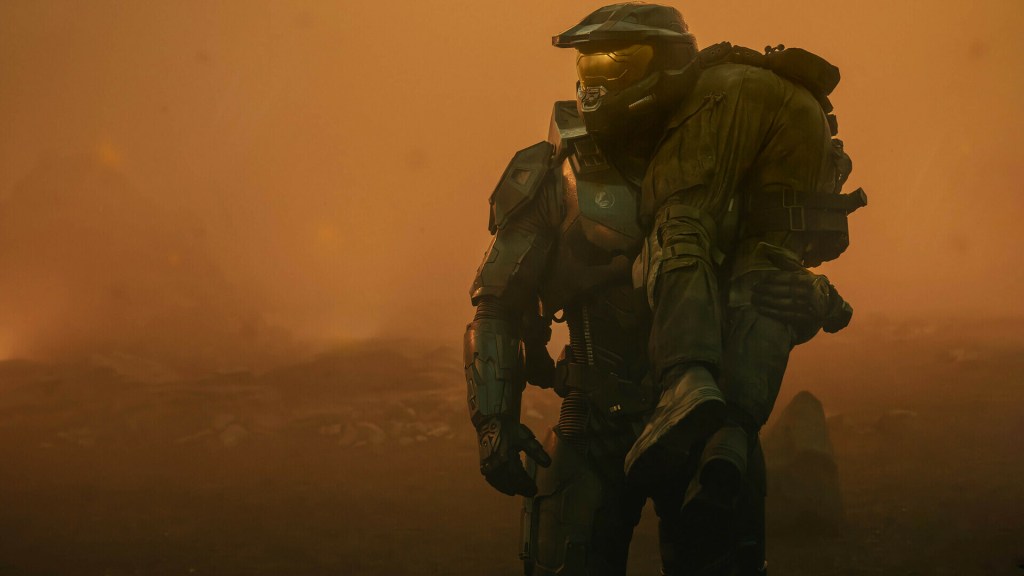
The now-complete second season of Halo finally gave viewers what they were expecting from the series: a gritty, apocalyptic story about humanity locked in an existential conflict with a genocidal alien enemy. In particular, it delivered on three long-awaited major events in the Halo continuity: the fall of Reach, Master Chief’s landing on the Halo itself, and the introduction of the parasitic ultimate enemy of Halo, the Flood. While much of the central plot of season one dealt with the past of the protagonist, John-117 (the Master Chief), season two finally delved into the lore of the Halo franchise, giving viewers their first hints on the nature of the Preservers (the extinct alien species that built the Halo).
While season two did manage to better capture the sense of hopelessness in humanity’s struggle against the Covenant, it still made some of the same mistakes the first season made (albeit perhaps less egregiously).
What I Loved
The War
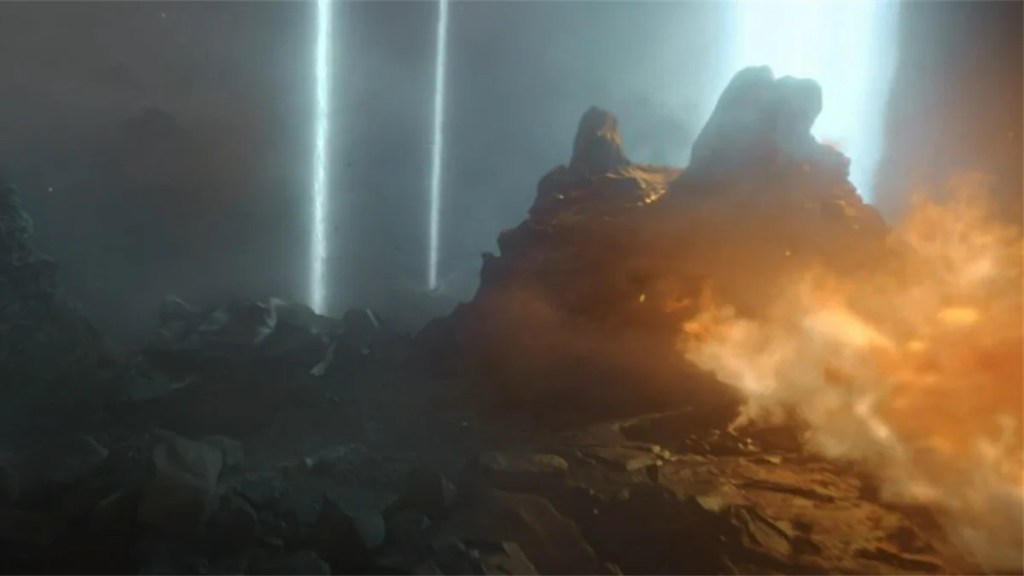
As I said, season two felt more like a gritty war story than season one. That pertains in particular to combat scenes. The first episode finally showed how the Covenant goes about destroying human-colonized planets: a limited invasion, followed by the planet being “glassed”. In the early Halo games, the Covenant was typically shown as an invading force. By showing them simply annihilating entire planets from orbit, we get a better sense of the Covenant’s threat to humanity. They don’t just want to conquer: the seek to exterminate.
The Fall of Reach
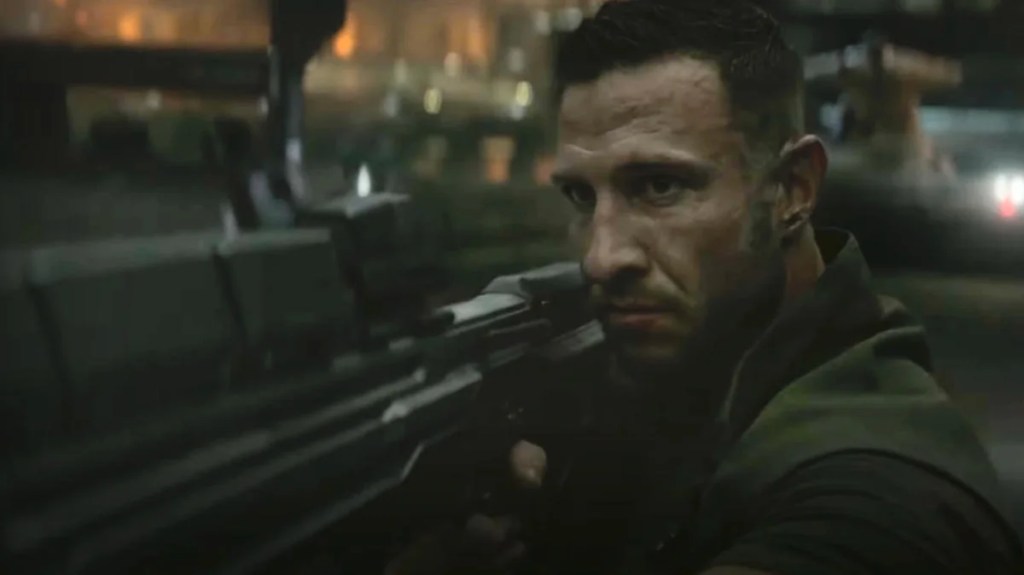
As I said above, from the first episode of the series, fans of the game had been awaiting the fall of Reach: a pivotal event in the Halo canon, which occurs almost immediately prior to the events of the first game. I’m sure many longtime fans were disappointed in the way it was done on the show: Master Chief and his fellow (surviving) Spartans were stripped of their armor prior to the battle. But I think it was both a bold and ultimately very successful move. By depriving the Spartans of (most of) their advantages in combat, it underscored the desperate struggle they faced. And by showing their faces, showing them fighting shoulder-to-shoulder with their fellow marines, it made the entire sequence that much more impactful.
The Finale
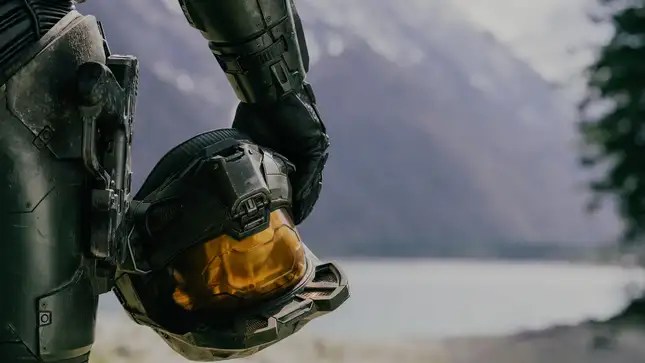
Once again, Halo ended the season with a bang. The season finale was another action-packed tour-de-force, with the harrowing squad-based combat that made Halo a hit as an FPS interspersed with the kind of epic space battles I would have loved to see more of in the games. Even better was the introduction of the Flood. The mid-episode space battle unfolded as a boarding action combined with a fleet action between human and Covenant ships, cut with the sudden emergence of Flood zombies in the UNSC command center, creating a sense of chaos that worked incredibly well. After taking a moment to tie up some loose ends in the plot, the episode ended with a fantastic energy sword duel between the Master Chief and the Covenant champion, the Arbiter, in what managed to simultaneously be gamer fanservice and riveting television. As with season one, Halo‘s delivery was shaky, but they stuck the landing.
What I Liked
The Flood
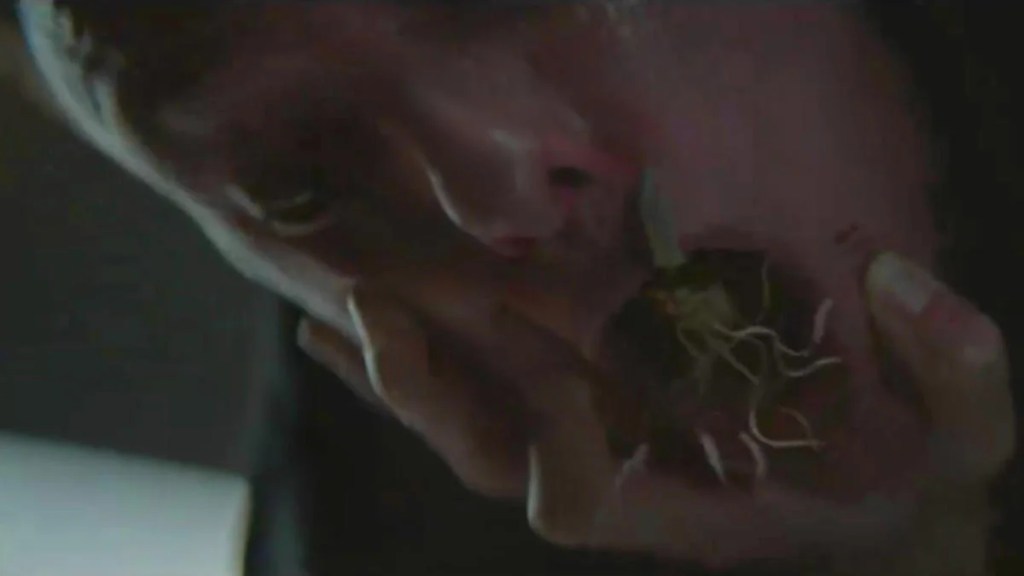
Fans of the Halo video games no doubt have plenty of residual anxiety about the Flood. They’ll also probably know their depiction as greenish-brown, tentacley zombie monsters would be hard to translate into modern television without looking painfully corny. From day one, like all fans of the games, I’d known the Flood would show up eventually, and had worried they’d appear contrived amid the recent successes of The Walking Dead and The Last of Us (despite Halo predating both).
In the end, I was pleasantly surprised by their approach, which fell somewhere between the Flood’s depiction in the games and Day of the Dead-style zombies. In particular, I liked the way they showed the Flood’s victims being paralyzed as the infection takes hold. The twitching of their faces and extremities, and their expressions, suggested they remained aware as their bodies were being hijacked. Add to that just the right amount of body horror, and George Romero would be proud.
“The Mother”
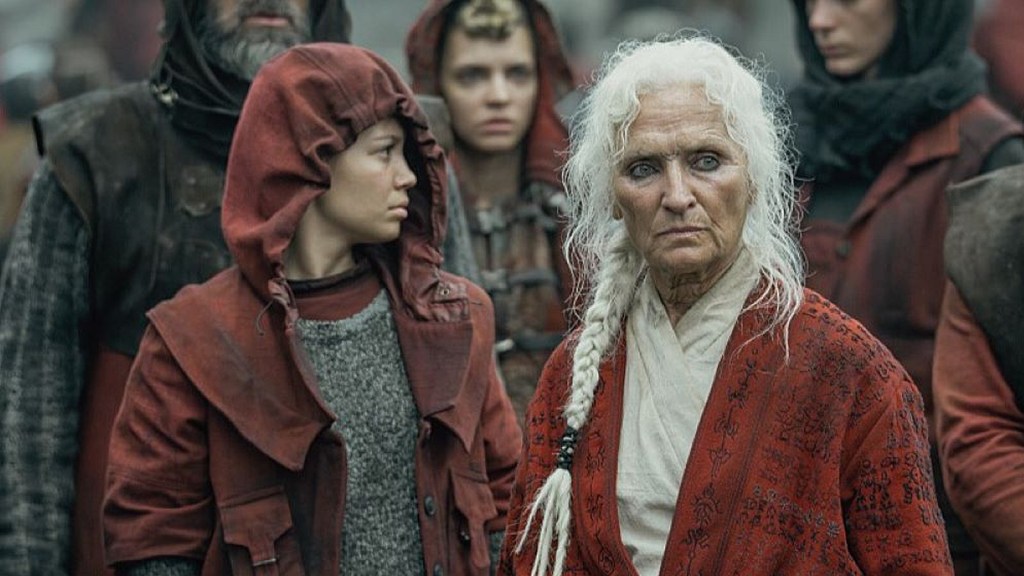
I love a good mystery, and Halo delivered in this season, with the introduction of “The Mother” (or the “Shaman Priest Person” as one UNSC marine delightfully put it). This strange woman appears on multiple planets, claiming to be the voice of life in the universe, and periodically appears in visions to Kwan Ha. Who is she? Is she one of the Preservers?
At first, I’d wondered if she might be a disguise worn by the Gravemind: the embodiment of the Flood’s collective consciousness, introduced in the 2004 video game Halo 2. After the scene in which she temporarily freezes the Flood zombies so Kwan Ha can escape, I feel that theory was incorrect. But the season ended without fully explaining who she is, or exactly what she wants. I like that, and the scenes in which Kwan Ha receives visions of her represent a fantastic use of altered consciousness. Frank Herbert couldn’t have done it better.
The Arbiter
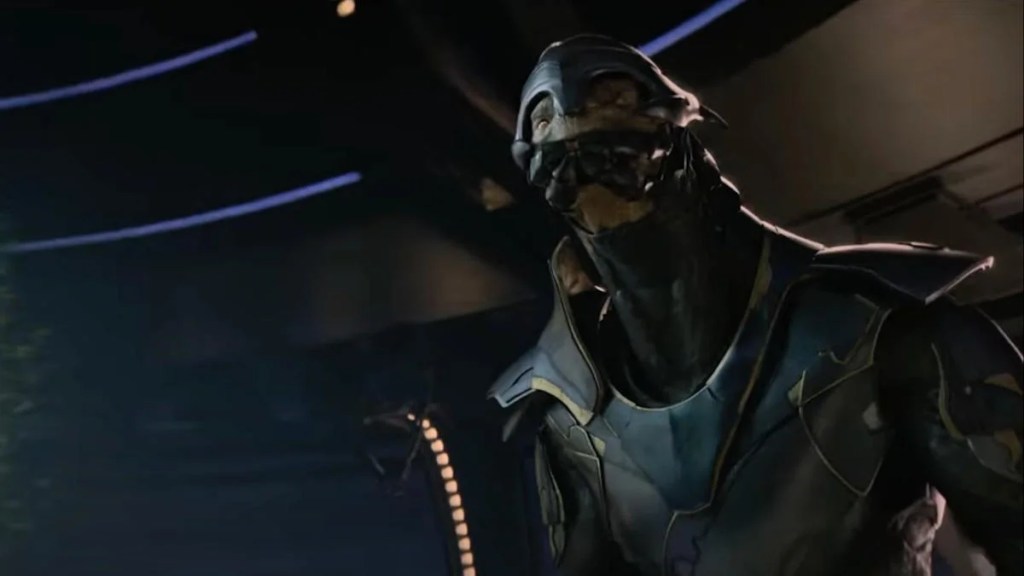
Fans of the Halo game series are very familiar with the Arbiter: a disgraced Elite warrior anointed by the Covenant to lead their armies. Introduced in 2004’s Halo 2, the Arbiter made his thunderous debut in the Paramount+ series during the climactic battle on Reach. As in the games, in the television series the Arbiter served to humanize the Covenant, showing them to be more than fanatic, genocidal monsters. And in just one season on screen, he stole the show, starting on Reach when he decapitated one of his own men for shooting the Master Chief before the Arbiter could face him one-on-one. Though his death was a fantastic scene, fans of the game know the Arbiter isn’t a person, it’s a title. So, hopefully, season three will introduce a new Arbiter. We shall see.
What I Didn’t Like
Makee

Many fans of the games hated the character of Makee in season one. I was not one of them. I thought she was a great bridge between humanity and the Covenant, and between the Master Chief and his own repressed humanity. Not only that, but her death at the end of season one was a powerful scene, which looked poised to set John-117 on a path to becoming the remote, stoic Master Chief of the games.
And then, this season, Makee was back. I won’t pretend she didn’t end up factoring into the plot in useful ways. But bringing her back felt like it cheapened her (presumed) death at the end of season one.
Kwan Ha
Speaking of characters unnecessarily brought back, every Halo game fan’s least-favorite character from season one was back for season two. And here’s the thing: Kwan Ha is here not because I didn’t like her character arc in this season. She’s here because I would’ve liked to have seen her season two arc in season one.
Season one couldn’t seem to decide what to do with Kwan Ha, beyond vastly overusing her. She went from being a petulant child to a surly teenager to an unflappable freedom fighter to a successful revolutionary, with very little explanation for this rapid transformation. By making her part of the mystery of the Preservers, tying her to the mysticism that’s arisen surrounding them, the writers in season two finally found a way to make her crucial to the plot. But I’d imagine I was one of many, many fans who was honestly relieved to hear Madrigal had been destroyed by the Covenant in episode one. And was honestly disappointed to learn, an episode later, that she’d somehow survived.
Jacob Keyes
This one is minor. But while I appreciated Captain (or rather Admiral) Keyes getting a heroic death and redemption during the fall of Reach, as a fan of the games I was disappointed to see that Master Chief would be landing on the Halo without his captain. I understand the revelations about his role in John’s abduction for the Spartan Program likely made him irredeemable in the eyes of many viewers. But I also felt John’s acceptance of him during the season one finale left the door open for him to play a bigger role going forward. Capt. Keyes deserved better…even if all he deserved was to become a snack for the Flood on the Halo (as was his fate in the first Halo game).
What I Hated
Pacing
Once again, this season of Halo took way too long to get to where it was going. And though this season avoided the biggest pacing mistake of the first one (an entire episode without the Master Chief), at times it was still a slog. Once again, the show veered off course too often to pursue subplots involving secondary characters that felt unnecessary.
The Covenant are shown to be on Reach by the end of episode two, yet they don’t actually attack the planet until episode four. Nearly an entire episode is devoted to a complex subplot solely to explain Soren’s presence on Reach during the battle. And after incorporating the Halo itself into this season’s opening credits, we don’t actually see it until near the end of the season finale. We have to wait almost that long until we see Master Chief reunited with Cortana. And after losing his armor prior to the fall of Reach (episode four), we have to wait until the very end of episode seven to see him wearing it again.
Cheap Emotional Pleas
When you’re writing a story about a humanity fighting a hopeless war for its very survival, it isn’t hard to create emotional impact. Yet after doing a superb job in season one, in season two it felt like the writers were trying way too hard.
Cheap pleas for emotion occurred repeatedly. Ackerson (a male character essentially meant to replace Halsey) was introduced as a clearly sinister character. But he was shown periodically interacting with his ailing father; a clear attempt to generate sympathy for him, setting up for his redemption at the end of the season.
Perhaps the most egregious emotional plea comes from the extensive plot real estate devoted to Laera, Soren’s wife. Introduced as little more than a background character in season one, she becomes a driving character in the wholly unnecessary subplot involving the abduction of their son. This leads to a protracted (and hard to accept) hero arc, seemingly to set her up to sacrifice herself for Soren and their son in the season finale.
Look, anyone who thinks they needed to establish Laera as a fearless hero for viewers to accept her sacrifice has never met a good mother. My mother is terrified of heights and spiders but would throw herself onto a grenade for her children. My partner now would do the same for ours.
Unresolved Plot
Season one of Halo took a lot of flack (plasma fire?) for trying to do too much. I felt that was unfair. This season I think it’s very fair. And I say that because this season left far too many subplots unresolved.
Makee seemingly died at the end of season one. She reappears in the second episode of season two. I can’t recall this ever being sufficiently explained; if it was, I didn’t remember it, which suggests it was simply glossed over. After viewers learn that Madrigal was wiped out in episode one, Kwan Ha turns up as a refugee in episode two. Very little is said about how she fought hard to liberate her home planet, only to have her people massacred by the Covenant. What’s more, the abrupt destruction of Madrigal makes her entire convoluted season one arc seem pointless.
The Verdict
Taken overall, I enjoyed season two of Halo, as I did season one. But as with season one, it plods along, spacing out crucial battles with needless character subplots and painfully slow building to the big scenes. From episode one, longtime Halo fans knew we were building to two major plot milestones: the fall of Reach, and the landing on the Halo. And yet the writers of the series took a season and a half to reach the first milestone, and shoehorned the second into the closing twenty minutes of the season finale.
I understand, as I mentioned in my review of season one, that this isn’t a game; it’s a dramatic work of fiction. But the fact remains that Halo is, first and foremost, a war story. Anyone who thinks a war story needs entire episodes devoted to characters wandering between battles has never seen such critically-acclaimed war dramas as Band of Brothers or The Pacific. War, in and of itself, is dramatic.
Once again, Halo delivered what everyone wanted: epic battles, struggles, dark mysteries waiting to be solved. But it took its sweet time getting there, forcing viewers to trudge through numerous episodes of maudlin self-reflection and angst. If they were releasing the entire season at once, it probably wouldn’t be so bad. But when releasing one episode at a time, they run the risk that viewers will get bored, and tune out. I really hope Halo goes into its next season leaning into what it has always been: a reminder that, however far into the future you go, war is hell. – MK
Both seasons of Halo thus far are currently available to stream on Paramount+. Watch for my next “Sci-Fi Reviewed” on April 4, where I’ll be looking at Star Trek: Discovery in advance of its final season. Then watch for my next “Knee-Jerk Reaction” the following day, where I’ll review the show’s season five premiere.
 Michael T. Kuester