Everything has a beginning. For each Olympic Games, that’s the opening ceremonies. It’s a “Hello” from the host city and country: a chance to display their culture and heritage, call for peace and understanding, and welcome the world into their home. And it’s an opening statement: a way to set the tone, and let the world know what kind of Olympic experience they plan to create.
Over the years, opening ceremonies have grown more and more lavish, with gimmicks and light shows and hordes of performers that put the most outrageous Super Bowl halftime show to shame. And amid all that, it’s easy to feel like it’s all been done. Each new Olympic Games finds it harder and harder to show audiences something new. But now and then, a host city really raises the bar. And that brings us to Paris.
I thought I knew what to expect from the opening in Paris, but I was happy to be completely wrong. Without wild pyrotechnics or armies of performers, Paris put on a show for the ages. They did it by bucking tradition, flitting between flaunting their history and embracing the future, while using their city and its most iconic monuments as a backdrop.
The Tradition of the Olympic Games
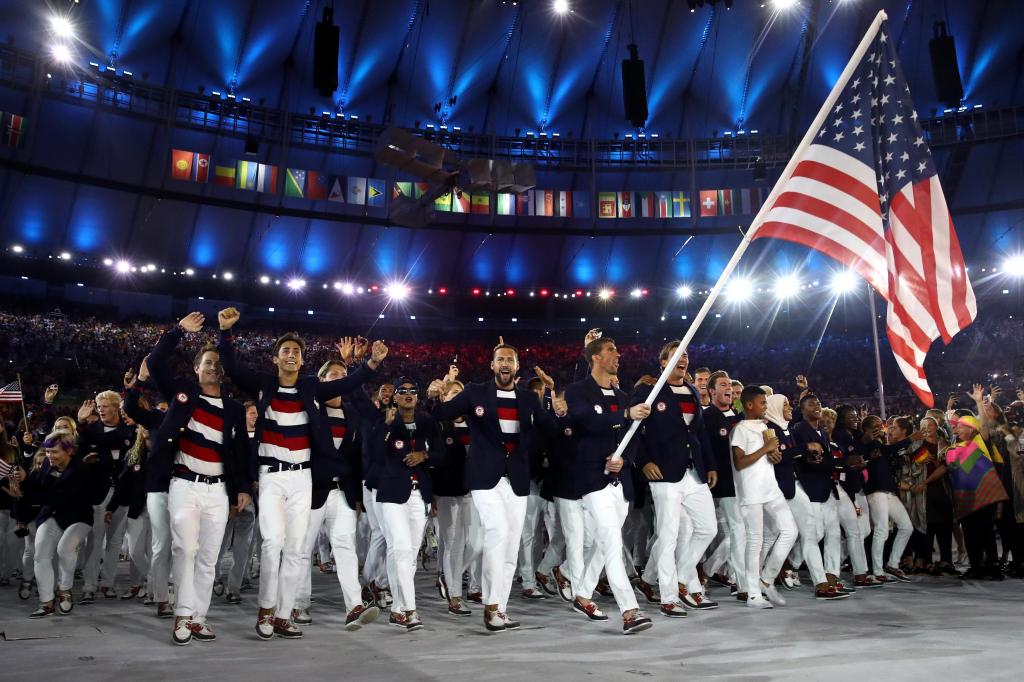
For the uninitiated, it’s important to first note that, historically, the Summer Olympics have stood stubbornly on ceremony. While the Winter Games offer host cities more leeway, the Summer Games are regimented. The opening ceremonies are unfailingly held in a large stadium (the opening for 2028 in Los Angeles will take place in SoFi Stadium). They begin with an artistic performance, showcasing the host nation’s culture. Then the athletes enter, on foot, led by their individual flag bearers. Once the athletes have entered the stadium, the flags are raised (the host nation’s flag and that of the International Olympic Committee), followed by speeches from various dignitaries (usually including the host city’s mayor and the president of the IOC, currently Thomas Bach).
But Paris turned it all upside down. First there was the setting: eschewing the typical stadium, Paris held their opening ceremonies right on the Siene, with the Eiffel Tower as the centerpiece of the show. Rather than entering on foot, the athletes arrived on boats driven down the Siene, some shared by multiple nations. The cultural performance occurred while the athletes were entering, played out as a series of shows along the banks with the city of Paris as a backdrop.
The individual performance pieces ranged from the campy (Lady Gaga singing in French, the Minions from Despicable Me training for the Olympics on a submarine) to the shocking and powerful, including a death metal performance leading into an aria from Carmen and a dance number commemorating French craftsmanship.
With the athletes assembled before the tower, the show culminated in the lighting of the Olympic cauldron. Since 1936, the cauldron has been the heart of each Olympic Games: a large torch in a central location. While the cauldron has changed over time, for most of the games’ history it has been placed somewhere within the main stadium (typically where track and field events are held in the Summer Olympics; in the Winter Olympics the stadium usually hosts performance events). The first games to break with that tradition were the 2010 Winter Olympics in Vancouver, where after the cauldron was lit in the stadium, final torchbearer Wayne Gretsky carried the flame to a second cauldron near the city center, where it would be visible to the public.
Once again, Paris turned tradition on its head, as the final torchbearers lit a ring-shaped cauldron beneath a hot air balloon (a French invention). Lifted by the heat of the flame, the balloon rose into the air, allowing the Olympic flame to be seen across the city.
Thoughts
I’ve had the privilege of seeing eighteen Olympic opening ceremonies. Each one is unique, and an expression of the host city and country. But even among all the other spectacular displays, Paris stuck out. They largely eschewed the huge gimmicks and spectacles that have come to define the opening ceremonies: surreal light shows, vast pyrotechnic displays, elaborate dance numbers with hundreds of performers. Instead, they used the city itself. Key moments, including a thrilling rendition of La Marseillaise sung from the rooftop of the Grand Palais and Celine Dion’s show-stopping performance on the Eiffel Tower, conveyed a sense of enormity.
In eschewing the customary stadium setting, Paris succeeded in putting on an opening act on an unimaginable scale. Instead of ending with wild fireworks displays, they offered a spectacular light show from the Eiffel Tower itself, and a performance from Celine Dion that left the world breathless. These games are far from over, but Paris made a stunning opening statement. And they set the tone for a return to the Games as they should be: open, welcoming, and very, very big. – MK
 Michael T. Kuester