After years of misery in the streaming space, Disney is on a hot streak. After righting the MCU ship with the release of Daredevil: Born Again, Disney+ finally delivered arguably its most anticipated streaming release: the second and final season of Andor. It’s hard to imagine a season of a TV series everyone waited for so long actually being worth the wait. But it was.
Season two of Andor was both a worthy continuation of the story and a fitting end. It leaned even harder into the tone, displaying both the unrelenting evil of the Galactic Empire and the deep-seeded hubris that led to its downfall. And in a more surprising move, it harkened back not only to the film that spawned the series, but also to the animated series Star Wars Rebels. It became a sort of companion to the series, finally completing the story of how the Rebel Alliance grew from a small conspiracy of lies and sabotage into a righteous revolution.
Andor was thrilling, raw, and powerful from beginning to end. So this month on “Sci-Fi Reviewed”, let’s look back at Andor: what made it good, what made it intriguing, and how Star Wars got back to the idea of good and evil, without the need for righteous heroes.
The Premise
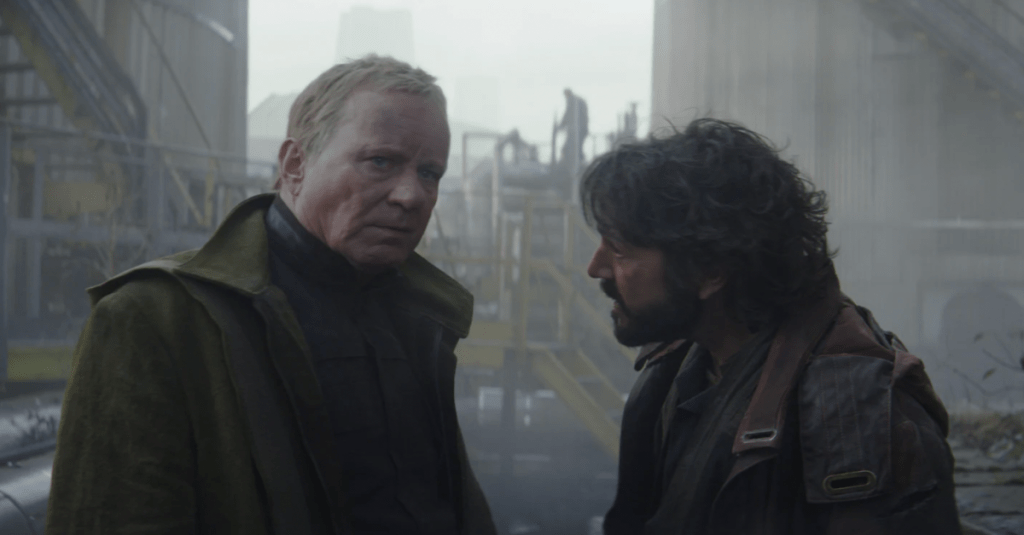
Based on the film Rogue One, Andor follows the eponymous Cassian Andor (Diego Luna): a native of a planet destroyed by the Empire. A stolen piece of Imperial technology puts him in contact with Luthen Rael (Stellan Skarsgård): the former soldier at the heart of a conspiracy to overthrow the Empire. The series follows Andor’s journey, as his work for Luthen pulls him into a web of lies and deceit, progressing from acts of theft to acts of terrorism.
The series splits time between Andor himself and Mon Mothma (Genevieve O’Reilly): the eventual leader of the Rebel Alliance. When the series begins, Mothma is still serving in the Imperial Senate representing Chandrila. The series ultimately reveals that she, too, is working with Luthen to undermine the Empire, having determined that peaceful resistance is ineffective.
Periodically, the series also follows two other characters: Syril Karn, a former corporate security officer who becomes obsessed with capturing Andor; and his eventual lover Dedra Meero, an ambitious officer of the ISB, the Empire’s secret police.
As Cassian gradually becomes Luthen’s most trusted operative, Mothma is forced to confront the reality of what she’s involved with, watching as Luthen uses his resources through his antiquities business to carry out deadly acts of terrorism, assassination, and sabotage. The series depicts the slow formation of the Rebel Alliance, as Luthen and Mothma establish a dark-money financial apparatus. Luthen is shown pulling the strings, at times using Mothma as a palatable public figurehead, going so far as to murder one of her closest friends to keep her name clean.
Season two, as expected, follows the overarching plot of the Empire’s Death Star program. As Luthen and Cassian get closer to discovering the project, the Empire fights to keep it secret, going so far as to massacre peaceful protesters on the planet Ghorman. Eventually, the show ties directly into the series Rebels, showing that Cassian single-handedly aided Mothma in escaping Coruscant (at Luthen’s direction), prior to her delivering her stirring call to arms.
The series draws to a close with the newly-established Rebel Alliance finally learning of the Empire’s secret project, and ends immediately prior to the beginning of Rogue One.
The Response
The critical response to Andor has been universal acclaim. After season one carried a 96% rating on Rotten Tomatoes, season two actually topped it at 97%. From the superlative acting to exceptional writing and storytelling, critics found a lot to love about the show and little to dislike.
And while Skeleton Crew struggled with viewership, Andor more than lived up to the hype, dominating streaming in most markets.
My Take
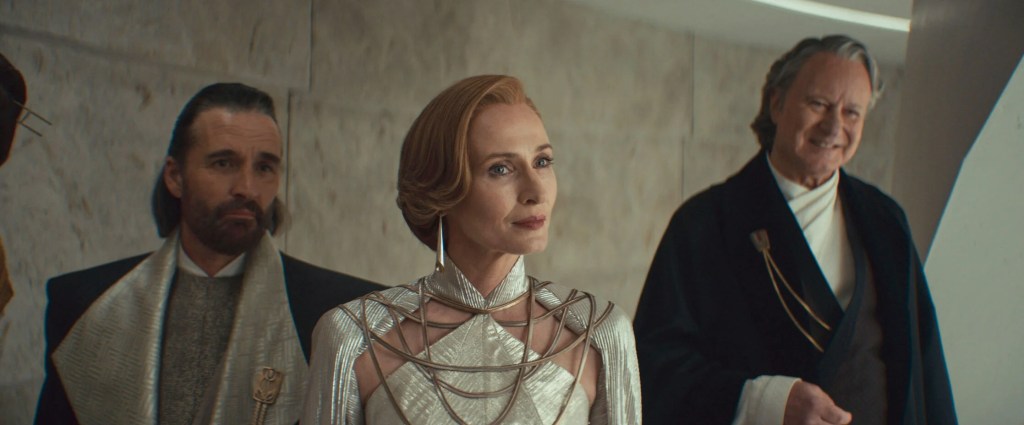
Like most Star Wars fans, I’ve been looking forward to the final season of Andor for a long time. And I was not disappointed. And easily the best part of the show, what made it so special, was its deep dive into both the Empire and the founding of the Rebellion.
After The Acolyte tried to muddy the moral waters of the Star Wars franchise, Andor reminded everyone of one simple fact: the Empire was evil. Even series like Rebels often showed the soldiers and officers of the Empires as bumbling idiots, hard to be afraid of. It was easy to laugh as the characters on Rebels outwitted the clumsy, comically-inaccurate stormtroopers. When those same stormtroopers opened fire on a crowd of peaceful protesters in Andor, nobody was laughing.
Andor showed audiences why people would have been afraid of the Empire. Its leaders are shown as extremely ambitious and morally bankrupt. They carry out orders that amount to genocide without a stray thought, and even when they do stop and question the ramifications of their actions, more often than not their primary concern is their own careers. The only real vulnerability of the Empire as shown in Andor is its hubris. And that vulnerability proves fatal, quite literally (a leading officer of the ISB commits suicide in the final episode, after failing to prevent the Rebellion from learning of the Death Star).
And then there’s the Rebellion itself. Andor gave viewers their clearest view yet of the first stirrings of rebellion against the Empire, and made an ugly point: by and large, revolutions in their infancy rely on bad people. Regardless of his motives, Luthen is depicted as being, at best, a morally-ambiguous character. He thinks nothing of having people killed, even his own operatives, to preserve the rebellion and further its aims. While Rebels showed the gallant, desperate fight of rebel soldiers on the front lines, Andor showed that their efforts were backed by Luthern’s terrorist network, relying on an effective apparatus for assassination and sabotage. In the end, Luthen proves that even his life is forfeit if it serves the Rebellion.
Andor did exactly what it set out to do: follow in the footsteps of Rogue One by putting the war in Star Wars. And reminding us that the story written by the victors isn’t always the whole truth. – MK
All episodes of Andor are currently available to stream on Disney+.
 Michael T. Kuester