I was very young when my parents introduced me to Star Trek. I have fond memories of watching the movies with the original cast, and sitting in front of the TV every week with my mother watching Star Trek: The Next Generation. The movies were exciting, full of plucky comedy and intense sci-fi action. But The Next Generation was different. It was thoughtful, introspective, as deep as the space the Enterprise explored. Captain Picard and his crew fought aliens, sure. There were humorous interludes, often involving Data’s attempts to be human. But through it all, The Next Generation dealt with morality. It brought up difficult, sometimes painful questions of right and wrong, often hiding commentary on our modern society. Much of the nuance of these questions was lost on me as a child; it wasn’t until I was re-watching the series as an adult that I really understood what it was trying to say. And when I did, I was surprised at just how relevant a decades-old television series could be. Against all odds, owing almost solely to the genius of Gene Roddenberry, Star Trek has withstood the test of time.
While I was elated at the introduction of Star Trek: Discovery, the first new Trek series since the 2000s, I had reservations regarding Strange New Worlds. It says a lot about how I’ve developed as a person that my primary concern dealt with storybuilding in the Star Trek franchise. Discovery was polarizing at times; it’s so completely different from any Trek series before it. But therein lies its brilliance: it’s the very expression of Roddenberry’s vision for Star Trek: keep moving forward, keep pushing the envelope. My fear was that Strange New Worlds would amount to little more than glorified fanservice: a cheesy attempt to placate Trek fans who were clamoring for the kind of series they remembered.
I’ve seldom been so happy to be wrong.
The Premise
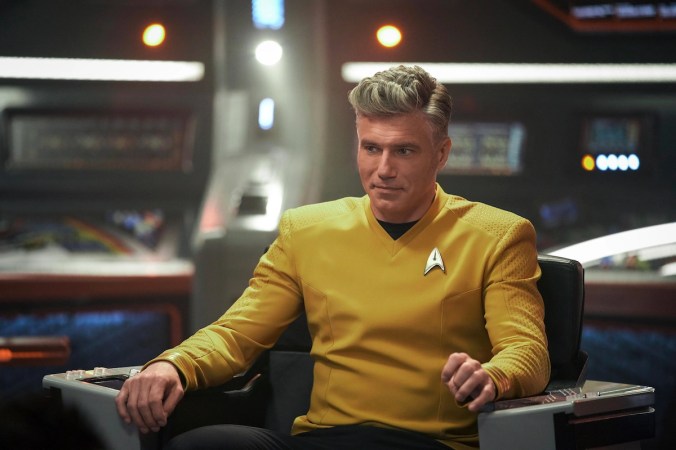
Strange New Worlds takes Star Trek back to its roots: the best ship in the Federation, crewed by the best and brightest Starfleet has to offer, who somehow still manage to be tested by the incredible challenges they face at the edge of explored space. Set roughly ten years before the events of the original series, Strange New Worlds follows the exploits of Captain Christopher Pike of the U.S.S. Enterprise, played masterfully by Anson Mount. Pike is joined on the Enterprise by his first officer, frequently referred to as “Number One” (Rebecca Romijn), and his science officer Spock (Ethan Peck), as well as a group of new characters. Unlike most modern sci-fi series, Strange New Worlds takes an episodic approach: while character development runs across the series, each new episode is a story unto itself. This format follows the story plan used in most of the Trek series of the ’90s and early 2000s, where character relationships grew and changed though the events of individual episodes were seldom referenced.
The first season’s overarching plot dealt mainly with Captain Pike grappling with his destiny. Trek lore laid down during the original series established Pike’s grim future: after leaving the Enterprise, he became an instructor at Starfleet Academy, where a training exercise left him confined to a wheelchair after he saved the lives of several cadets. While Trek has always been good about maintaining its canon, Star Trek: Discovery put a new spin on it, showing that Pike learned of his fate a decade before the accident. Strange New Worlds‘s first season sees Pike struggling to decide how best to spend his final years, and wondering whether or not his future could be changed.
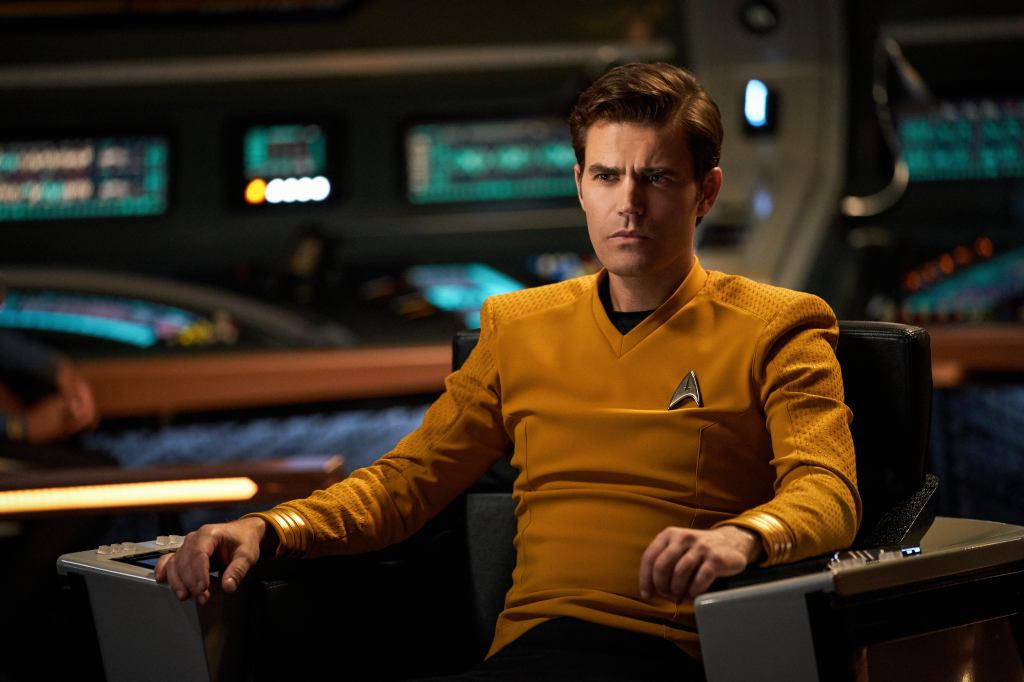
With the second season, the overarching plot began trending toward the growing threat of the Gorn: a species of intelligent reptiles. Established as a threat during the original series (where Kirk infamously had a fist-fight with a Gorn, meaning an actor with a giant rubber suit and an obvious zipper). All the while, Pike is shown settling into his new life, having shifted his focus from lamenting his fate to securing the future for his ship. To that end, James T. Kirk (played by Paul Wesley, who steps into William Shatner’s role) features prominently throughout the season, as the show hints at Pike eventually grooming him as his successor.
The Response
Thus far, Strange New Worlds has been an even bigger success than its predecessor Discovery. The show has been heaped with accolades and broad critical acclaim, with the first two seasons holding ratings of 99% and 97% respectively on Rotten Tomatoes. Since its first season, it has consistently been one of the most-watched series on Paramount+, or any streaming service.
My Take
There’s a lot to love about Strange New Worlds. For longtime fans, it returns Star Trek to its roots, depicting a hopeful future in uncertain times. For the uninitiated, it delivers the character-driven stories, complex relationships, intense action and CGI eye candy viewers have come to expect from big-budget sci-fi series. But to me, its greatest value lies in its effect on the Star Trek franchise as a whole.
For some time now, I’ve held an opinion that’s almost sacrilegious to die-hard Trekkies: after over sixty years, Star Trek was in dire need of an update.
It’s not Gene Roddenberry’s fault: his original series was a masterpiece of science fiction in its day. But in the end, both 1960s television budgets and limits on imagination kept Star Trek from aging gracefully. The technology of Starfleet is the most obvious example (thrown into stark relief by Star Trek: Enterprise, which featured similar technology despite being set over a century before the original series). But it’s not the most glaring.
Watching the original series today, it’s hard to picture it as the future. More like the 1960s in space, from the hairstyles to the abundance of white male faces and sexist tropes (both of which Roddenberry pushed back on, with varying degrees of success). Even the oft-maligned womanizing exploits of Captain Kirk were the result of Roddenberry compromising with studio executives looking to make the show more marketable in its day (the execs had wanted Kirk to fraternize with female crewmembers, which Roddenberry refused to allow).
As early as the third season of Star Trek: The Next Generation, the franchise began to move away from a contemporary look and strive to depict a believable future. From more diversity in minor characters to the unique fashion and culture of Star Trek‘s future, TNG and its successors really feel like the future, even now.
With Strange New Worlds, Roddenberry’s original vision finally got with the program.
Since its first episode, Strange New Worlds has been setting things right for the original series. Little by little, it’s been giving Trek a much-needed soft reboot. From LGBT and disability representation to an increased presence of aliens aboard the Enterprise, Strange New Worlds is finally paying off Gene Roddenberry’s original ideas for his series. Pike himself hews more faithfully to Roddenberry’s original vision of a Starfleet captain: bold and confident, but also studious, cautious, kind and understanding.
Ultimately, Strange New Worlds has completed the task Discovery began: updating Star Trek for a modern audience, while preserving its soul. And though I was disappointed to learn the series will end after its fifth season (the third premiered just this week), I’m happy to know we have at least two more years of awesome sci-fi storytelling.
And the story is by no means over. The showrunners have long said they have story ideas set along an indefinite timeframe. They’ve suggested their original plans involved moving straight into the original series once Pike’s time is done. While I’m sure many Trekkies dread the prospect, personally I’m hoping for a follow-up series with Paul Wesley as Kirk, serving at last as a full reboot of the series.
For those fans who are still disappointed at the established endpoint, I’d like to point out that while I too was disappointed to learn the series would be capped at five seasons, it wasn’t until watching the third season premiere tonight that I understood the endpoint was not arbitrary, or borne of market concerns.
After all, each episode begins with Pike saying, “Space: the final frontier. These are the voyages of the starship Enterprise. Her five-year mission: to explore strange new worlds. To seek out new life and new civilizations. To boldly go where no one has gone before.” – MK
New episodes of season three of Star Trek: Strange New Worlds premiere each Thursday on Paramount+. All episodes of seasons one and two are currently available.
 Michael T. Kuester