Are we alone?
As I’ve said in past posts, modern science answers with a definitive “no”. The idea that the conditions necessary for intelligent life to evolve exist on our planet and nowhere else is accepted as a statistical impossibility. That idea forms the underpinning for the famous Drake Equation. Introduced in 1961 by American astrophysicist Frank Drake, it estimates the number of alien civilizations in our galaxy as follows:

where,
N = the number of civilizations in the Milky Way galaxy with which communication might be possible (i.e. which are on the current past light cone);
and
R∗ = the average rate of star formation in our galaxy.
fp = the fraction of those stars that have planets.
ne = the average number of planets that can potentially support life per star that has planets.
fl = the fraction of planets that could support life that actually develop life at some point.
fi = the fraction of planets with life that go on to develop intelligent life (civilizations).
fc = the fraction of civilizations that develop a technology that releases detectable signs of their existence into space.
L = the length of time for which such civilizations release detectable signals into space.
Based on this equation, Drake estimated that there were between one thousand and one hundred million planets in our galaxy harboring intelligent life. That’s a big number. You’d think we’d have found at least one of them by now. Yet we’ve been aiming radio telescopes into the universe for decades, and so far, not a peep.
So, if there are so many intelligent species elsewhere in our galaxy…where are they?
This seeming discrepancy is known as the Fermi Paradox, as it was first put forth by physicist Enrico Fermi. Since the 1960s, numerous hypotheses have been proposed to explain the paradox, some fairly banal, others outright horrifying. So this month in “Science in Fiction”, let’s take a look at the Fermi Paradox: how science fiction has dealt with it, what modern science has to say about it, and how the modern sci-fi writer should deal with the unnerving silence of the cosmos.
The Drake Equation and Fermi Paradox in Science Fiction
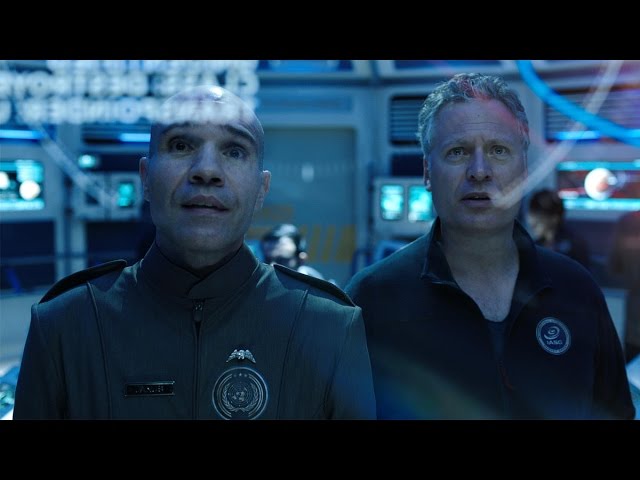
Unsurprisingly, the Drake Equation has made its way into science fiction more than once. In addition to being mentioned in Star Trek, the equation was a major plot device in both the Expanse novel series and subsequent television adaptation. However, in recent years as sci-fi has swung more to dystopia, the Fermi Paradox has featured more prominently. In particular, one of the hypotheses proposed to explain the paradox (the “Dark Forest” Hypothesis) factors heavily into the plot of the Three Body novel series by Liu Cixin. Though it didn’t factor prominently into his work, sci-fi legend Arthur C. Clarke famously provided his own theories on the paradox.
The Fermi Paradox in Science

For our purposes, we’re going to focus on the Fermi Paradox, as it features more prominently in modern science. Fermi posed the paradox at a time when our species was first pointing powerful telescopes, including radio telescopes, into space. If Drake was to be believed, he reasoned, the universe should be abuzz with activity. We shouldn’t be able to point a telescope anywhere without picking up something. Instead, our efforts were met with silence.
Since his time, scientists have debated the potential explanations of the paradox, spawning various hypotheses. Let’s take a look at them, starting with the most believable and moving on to the more extreme. Ultimately, these various hypotheses fall into four distinct possibilities:
Alien Civilizations aren’t as common as we think
…or as Drake thought, either. We’ve learned a lot about planetary systems since Drake’s time; an era where the very idea of planets orbiting other stars was purely theoretical. And based on recent discoveries, some scientists have begun to question Drake’s logic. Some recent hypotheses suggest there could be as few as twenty intelligent species in our galaxy (including us).
The key factor underpinning this concept is time. As I’ve said in past “Science in Fiction” posts, one of the key ingredients for the evolution of intelligent life is time. It took billions of years of evolution for our planet to produce our species, and there were a lot of catastrophic setbacks. It could be that even seemingly ideal worlds have only a minute chance of producing intelligent life. And if that is so, the possibility of us finding one of them any time soon is remote, at best. And that timing could work against us in another way, leading to a specific hypothesis:
The “Flicker” Hypothesis
Consider this: our planet has existed for billions of years. Life has existed on it for a little less than that. Complex life? Even less. Our own species has only existed for roughly a million years. We’ve only been capable of detecting signals from space for less than a century, about as long as we’ve been beaming out signals of our own, announcing our existence to the galaxy.
If any intelligent species were capable of directly viewing our planet, they’d still be viewing it only as it was when the light they’re seeing was reflected off of its surface, potentially centuries or even eons ago. Arthur C. Clarke once suggested this time discrepancy posed an insurmountable obstacle to our detection of other civilizations; many may have risen and fallen before we even knew they were there.
Aliens are trying to talk to us, but we can’t understand them
This one holds arguably the greatest consensus in the scientific community at present. Our species has been beaming transmissions into space for a while now. But the truth is, we have no idea if any other intelligent species is hearing them, or even if they’d understand them to be an artificial signal and not natural phenomena. After all, more than once we’ve detected what we believed to be an alien signal, only to determine it was produced naturally (by pulsars, for example).
This, in turn, has led to several more specific hypotheses:
The “Lost in Translation” Hypothesis
This one might be the most obvious, but often in science the simplest explanation is the truth. Some scientists believe that there is simply no way to understand alien attempts at communication. Our species could be so completely different as to render mutual understanding impossible. If this is so, our attempts to beam signals into space are simply meaningless.
The “Lighthouse” Hypothesis
Space is vast, to the point of defying human understanding. And that could be a huge problem.
Picture a lighthouse. Its beam sweeps through the air, so that an approaching ship doesn’t see a continuous light, rather one that appears to flick on and off. In order to see it, you have to be looking at it at the right time. Now, if you’re shining a light out into space, you have three hundred and sixty degrees across multiple axes to deal with.
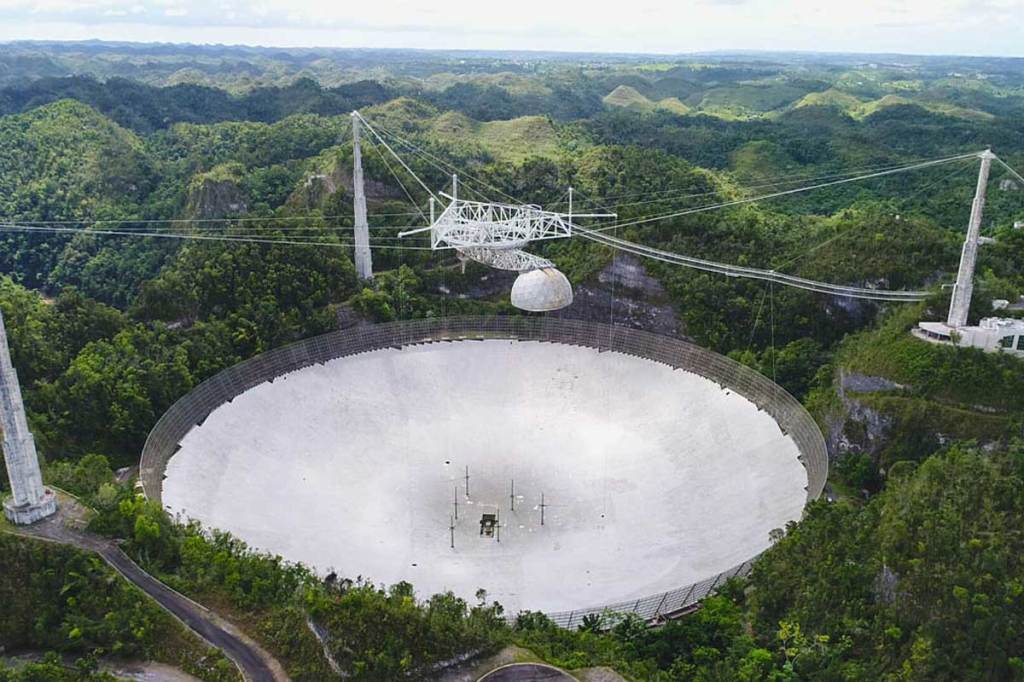
Basically, this hypothesis suggests our difficulty in both beaming signals to another intelligent species and receiving theirs boils down to time and energy. When we beam signals into space, we do so in intervals; short bursts fired off into the cosmos. But for an alien species to see them, they’d have to have a radio telescope pointed toward the general vicinity of our planet. We don’t have the power to transmit the signal continuously, nor do we have the time and equipment needed to constantly scan every region of space.
We could very well have already beamed signals to an alien civilization. They might even have beamed signals to us. Yet we both continue on in our oblivion, simply because we’re not listening to the right place at the right time.
The “Alien Gods” Hypothesis
This one is also taken from Arthur C. Clarke, who once suggested that sufficiently advanced technology would be perceived by a less-advanced civilization as magic. It could be that our ability to detect alien signals hasn’t progressed enough for us to even understand their attempts at communication. They may be beaming constant messages to our planet, but we simply aren’t advanced enough to understand it as communication.
Aliens don’t want to talk to us
Frankly, it could be that we can’t hear any other intelligent species because they don’t want to be heard. I know it grates against our inherent conceit, but the truth is, our species might just not be that interesting. Or there could be something more sinister, or even altruistic, at work…
The “Dark Forest” Hypothesis
Named for the eponymous novel by Liu Cixin (a proponent of this hypothesis), the “Dark Forest” hypothesis suggests other civilizations aren’t trying to communicate out of fear. This hypothesis posits that advanced intelligent species tend to be extremely forward-thinking; they understand that the resources of our galaxy, though immense, are also finite. Thus, to secure their future expansion they would use extreme measures to wipe out any other intelligent species they come across. Liu likened our place in the universe to a dark forest filled with hunters. Our only hope of survival is to remain still and quiet, until we are advanced enough to defend ourselves, and eventually take resources from other species.
All of that certainly sounds grim. However, it’s worth noting this hypothesis had one other notable proponent: Stephen Hawking. Despite devoting his life to the study of the cosmos, Dr. Hawking infamously suggested it was reckless to beam transmissions into space, as we might be advertising our existence to hostile aliens looking to steal our planet and its resources.
The “Prime Directive” Hypothesis
In Star Trek, Gene Roddenberry famously introduced the Prime Directive: a law that forbade Federation starships from interacting in any way with less-advanced species. It is entirely possible that other intelligent species are intentionally ignoring us, simply because we’re not yet advanced enough to warrant interaction. While some theorists subscribe to Roddenberry’s altruistic view, others have suggested aliens may be avoiding Earth because our species is confined to a single planet. As such, our solar system may be regarded by aliens as a sort of “nature preserve”, for our endangered species.
Aliens can’t communicate with us because they’re all dead
This is arguably the most apocalyptic (and unsettling) potential explanation for the Fermi Paradox. Some theorists have suggested we haven’t found any other intelligent species because there aren’t any. This hypothesis is often called the “Great Filter”, as it suggests most civilizations don’t last long before calamity strikes and they go extinct. Many hypotheses have spun out from this one, offering potential Great Filters. Some may bode well for us, while others may spell trouble ahead…
Natural Disasters
Look, in space, accidents happen. We should know. After all, our own planet has experienced at least one catastrophic impact that we know of. The bolide that killed the dinosaurs nearly wiped out all life on Earth, and rendered our planet a near-lifeless rock for some time after. Some proponents for this filter suggest it means we lucked out; our planet already had its catastrophic impact. Others, however, suggests our past asteroid impact only underscores an existential threat; Dr. Neil DeGrasse Tyson has famously declared that the dinosaurs wouldn’t have gone extinct if they had a space program.
And there are other things that can happen to a habitable world. Solar storms, encounters with rogue planets. And if any of those things happen, we might not have a chance.
Nuclear War
This filter hypothesis gained traction during the Cold War, for fairly obvious reasons. It could be that the majority of intelligent species that discover nuclear fission ultimately use it to annihilate themselves. It’s an uncomfortable fact that our own species came dangerously close to doing so, more than once. If nuclear Armageddon is the great filter, then that means we made it through…for now, at least.
Climate Change
This one has gained significant traction over the past twenty years (again, for obvious reasons). It has been suggested that most intelligent species discover how to use fossil fuels, as ours did, and ultimately destroy their planet before they can reverse the damage.
As terrifying as this is, given the current state of world affairs, it’s worth noting we’ve made significant progress toward addressing climate change over the past decade. Already, many scientists believe we’ve averted the most catastrophic potential outcomes of our current climate crisis. But we’re not out of the woods yet.
Artificial Intelligence
This idea has been around for a while, but needless to say it’s been gaining a lot of credibility of late. Some scientists believe the creation of artificial life may be the final phase of development for an intelligent species. By producing increasingly advanced artificial intelligence, a species may unwittingly produce their replacements. Luckily, as I mentioned some time ago in my “Science in Fiction” piece about AI, scientists have seen the same sci-fi horror movies you’re thinking about right now. But unchecked artificial intelligence carries extreme risks. And if this is, in fact, the Great Filter, we may already be in the endgame.
In the end, we really don’t know why our galaxy appears so quiet to us. Any of these possibilities could well provide the explanation. But for now, they remain possibilities. And the real reason remains the purview of science fiction writers. – MK
 Michael T. Kuester