In science fiction literature, there are a handful of names that tower above the rest. Ray Bradbury, Philip K. Dick, Arthur C. Clarke, Frank Herbert, and of course Isaac Asimov. These men, writing in an era when space exploration was purely theoretical or in its infancy, spurred our species’ technological evolution with their vast imaginations, picturing a future in which mankind had conquered the stars, finding new challenges and perils as they went. And they did it all without the benefit of some of the most basic knowledge of cosmology, computer science, and space travel we take for granted today.
Even among these luminous names, Isaac Asimov stands as a towering colossus.
Like his contemporaries, Asimov was more than just a writer. He was a scholar, a student of space who wrote nonfiction works on cosmology as well as fiction; a renaissance man of the late Cold War. Over the years, his work has inspired many science fiction writers…including me. But only one of his works, I, Robot, had been adapted to screen. Until 2021.
Originally written as a series of three novels in the early 1950s, Foundation tells the story of a new human civilization led by scientists, striving through the centuries to build an enlightened humanity from the ashes of a bloated and crumbling interstellar empire. Through it, Asimov wove a story of hope, in which the scientists of the Foundation repeatedly outwit and out-engineer warmongers to elevate their species. The television adaptation by Apple TV+ is thus a generation story told on a galactic scale. So this month in “Sci-Fi Reviewed”, let’s take a look at Foundation: how the television series diverged from the source material, why it works, and how Apple transformed a seventy-year-old series of novels into the next great sci-fi epic.
WARNING: Spoilers ahead for Season 3 of Foundation
The Premise
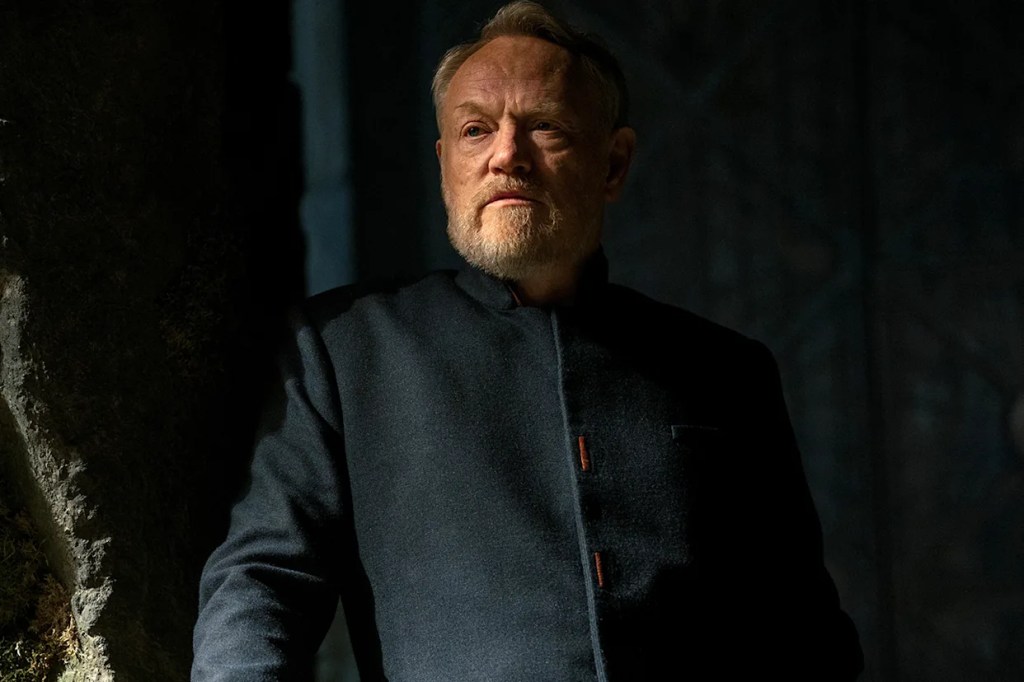
Foundation begins thousands of years into the future, on the planet Trantor, seat of a vast empire spanning the galaxy. There, mathematician Hari Seldon makes a remarkable discovery: using the probabilities associated with mass action, he is capable of using mathematics to predict the future. That revelation is swiftly followed by another: based on his calculations, the galactic empire that has stood for millennia will fall in a matter of centuries.
That collapse will be followed by a dark age of chaos and war spanning tens of thousands of years, but in his numbers Seldon finds hope: a way to shorten the dark ages, and produce a more enlightened civilization on the other side. To effect this outcome, he gathers a team of scientists to colonize the distant world Terminus, on the far edge of the galaxy. This group of scientists becomes known as the Foundation.
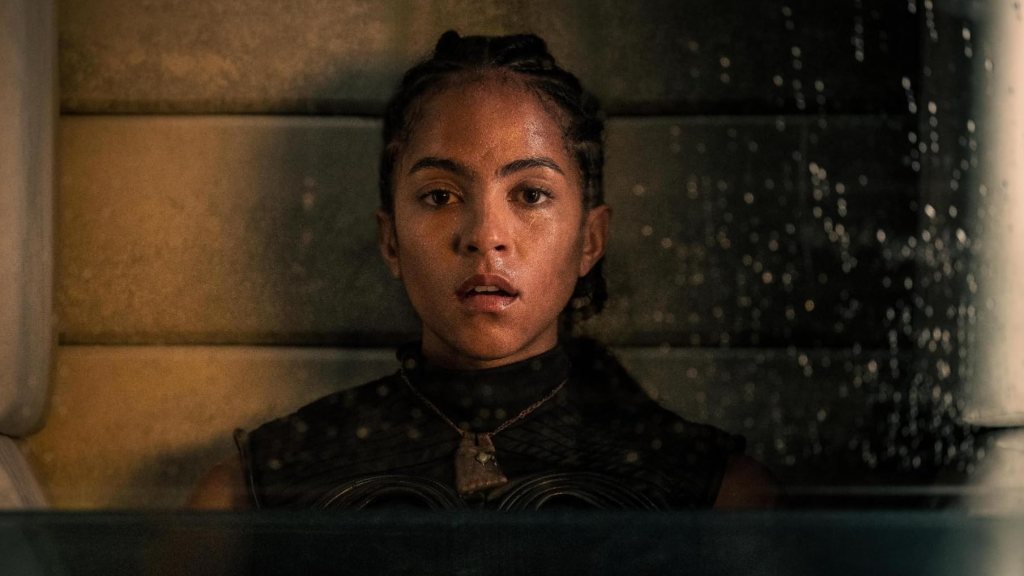
Key to Seldon’s plans are two people: his adopted son and protege Raych Foss (played by Alfred Enoch) and promising young Synnaxian mathematician Gaal Dornick (played by Lou Llobell). But Seldon’s plans are complicated by his realization that, for the Foundation to succeed, he cannot directly participate in it. After Raych is interrupted by Gaal while killing Seldon, his initial plan is placed in jeopardy: Raych helps Gaal use the escape route Seldon had intended for him. Gaal ends up frozen, lost in space for a century, while Raych is executed by the Foundation for Seldon’s murder.
From there, Foundation becomes a generational story. Each season skips ahead through the centuries, as the Foundation gradually grows and expands, weathering difficulties known as “Seldon Crises” with the help of Hari Seldon’s disembodied consciousness, preserved in a mysterious object on Terminus known simply as The Vault. While the original Foundation evolves based on Seldon’s plan, Gaal ultimately reunites with a resurrected Seldon to enact the second, secret part of his plan: founding a Second Foundation, which serves to safeguard the plan by nudging the First Foundation in the right direction.
All the while, the Galactic Empire, led by successive clones of Emperor Cleon I (Lee Pace) slowly withers and contracts, riven by internal strife and weakened by the growing power of the Foundation.
The recent third season, largely based on part one of the novel Second Foundation, sees the Foundation face its most critical crisis: the emergence of a psychic warlord known as the Mule. With the Foundation powerless to stop the Mule’s onslaught, and the final clone of Cleon going mad and seizing absolute power with a black hole weapon, the Second Foundation must stand alone. Gaal Dornick and her “Mentalics”, individuals with telepathic abilities, must intervene to defeat the Mule and preserve the First Foundation as the Empire enters its tumultuous final days.
The Response
To date, Foundation has been nominated for two Primetime Emmy Awards and three Critics’ Choice Awards, and won two awards from the Visual Effects Society. Critics have largely praised the show’s visual effects and acting, though the first season received only mixed-to-favorable reviews due to the complexity of its plot and character building. Since then, however, the second and third season have been universally lauded.
My Take
There’s one major reason Foundation took so long to be adapted to television (or any screen, for that matter): its scope. Isaac Asimov’s original series of novels followed the basic pattern followed by many of his contemporaries, including Arthur C. Clarke and Frank Herbert: it was a sprawling story, set across dozens of planets and featuring many powerful characters across generations of time. The prospect of adapting such a work for a screen is daunting, to say the least. Just ask the producers of the ill-fated 1984 adaptation of Frank Herbert’s Dune.
Among the notable concessions showrunners have made to their medium is the shift in several of the main characters. Both Hari Seldon and Gaal Dornick played a much less prominent direct role in the novels; both appeared only briefly in the first part of the first novel (though Seldon continued to appear in the form of holographic recordings throughout the books). As was the case with the television adaptation of The Expanse, characters were shuffled into different roles in order to maintain continuity for a television audience. Seldon was never resurrected in human form in the novels, and Dornick was little more than a plot device. Neither played a direct role in sculpting the Second Foundation as they have in the streaming series.
But Foundation has the benefit of existing in an era of big television that hinges on interpersonal intrigue beneath grand, overarching plots. It follows Game of Thrones and The Expanse, both based on epic series of novels, both of which it can flatteringly (and rightly) be compared to. It manages to maintain the cerebral element of the novels while delving into the sort of violence and betrayal known to fans of James S.A. Corey and George R.R. Martin. And through it all, it manages to maintain those traits I’ve long associated with Asimov’s work: shocking twists, desperate acts, and the triumph of science and hope over violence and despair.
In an era of increasing instability both in the US and abroad, the core message of Foundation is more crucial than ever: that hope can still prevail. That a small number of smart people can move the world. And that, to paraphrase Asimov himself, science will be our salvation, if we are to be saved at all.
All three seasons of Foundation are currently available for viewing on Apple TV+. Season Four has already been announced, with an expected release date of 2027. In next month’s “Sci-Fi Reviewed”, I’ll be reviewing the Apple TV+ adaptation of Murderbot by Martha Wells.
 Michael T. Kuester