Once again, I’ll start by pointing out that I do indeed realize it’s Thursday. But after a busy night of research, I’m ready to fill my readers in on what I’ve been working on for the next phase of The Pioneer. Without further ado, here we go:
The Pioneer
After a brief respite, starting tomorrow I will be revising phase one. However, far more pressing at the moment is what lies ahead for phase two.
Phase two of The Pioneer will see the colonists first set foot upon the planet they’ll ultimately call home. And in this, I find my next major challenge: I must create an entire world.
It’s a daunting task: imagining a world completely untouched by human hands, devoid of our careless footsteps, our snapping cameras, our endless need to meddle and interfere, to damage what’s vital to our survival, then scramble frantically to protect it. An entire planet with its own set of rules: its own continents and seas, weather and seasons, currents and clouds, its own days, hours, minutes and seconds. An entire planet teeming with life, from unknown viruses and bacteria to flitting insects, to birds, foragers, scavengers, predators…
Luckily, at least I have source information. Over the course of human history, we’ve taken our time learning everything we can about its planet and its history, and we have learned a lot. In some ways, the magnitude of my task is eclipsed by the breadth of data I have to go on. To say it’s all a bit overwhelming is a vast understatement.
So, to do this, it became clear that I needed to establish parameters; I needed to winnow it all down, to confine my research and notes to the comfortable confines of the story itself. I determined early on that this planet is passing through a period analogous to the middle cretaceous on Earth, which helped. I further decided that the overall global climate was cooler than that of Earth during much of the Cretaceous, which helped me to understand what most animals would look like, how the weather would feel. At last, a picture began to emerge of what I was trying to create. Individual species of animals began to take shape; not precisely like those we know from our own fossil record, but variations on a theme. To me, it bears out logically: if evolution is, at its core, a natural reaction of life to the needs of survival, it stands to reason that on a planet similar to our own (similar enough for us to be comfortable there) life would evolve in a manner that would be familiar to us.
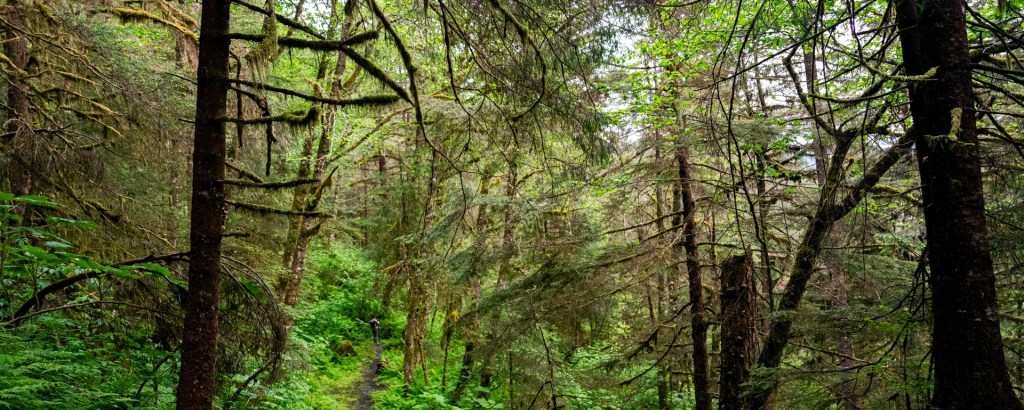
The last piece of the puzzle was the confines of the colony itself: knowing that the colony will be built across a large swath of dense forest dotted by lakes and clearings, I’d found something to narrow all of the animals down: an ecosystem. Now I knew what these creatures would look like, found ecological niches for them to fill. Apex predators, fast-moving pack hunters, scavengers, herbivores, large and small. At last, a definitive image of this alien planet took shape.
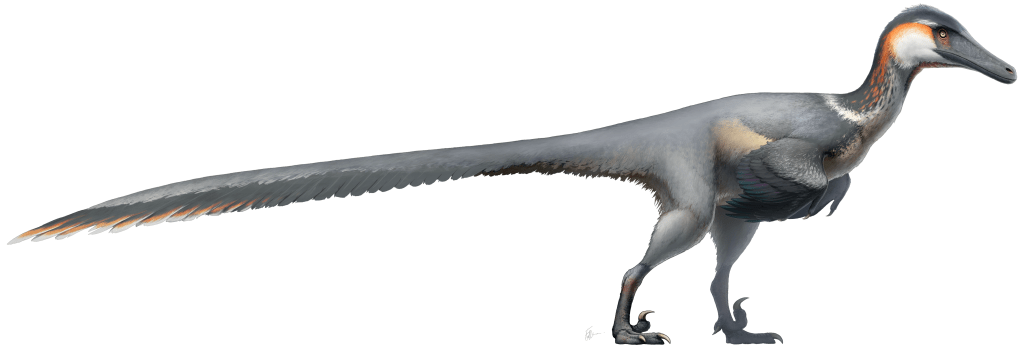
I now know how this planet will work: what life forms the scouting party will encounter, how the climate behaves, what they will see, feel, smell, and hear. Much remains to be done, but now I know where I’m going. The animals on Phecda 9 are mostly feathered therapods, with a few larger, heavier sauropods, as well as primitive birds and modern reptiles. There will be insects, no doubt, bees most likely. And though this will be a hostile, alien place, in time the colonists will learn to coexist with their planet, and thrive.
They will learn to coexist, because they will learn the rules. Just as I have. – MK


 Michael T. Kuester
Leave a comment