When I was thirteen, I began to realize something was wrong with me.
I’d always loved science. I was a voracious learner; always wanting to read more, ever disappointed upon receiving each new science text at school when I was told we wouldn’t make it to the end. So once I completed the day’s assignments, which I always did quickly, I’d flip through the coming chapters, the coming units. I always wanted to learn more.
Then, I started having trouble.
I found it harder to grasp new mathematical and scientific concepts, a problem compounded by the fact that, by that point, I’d reached the stage at which math and science are inextricably connected. I grew frustrated, and quickly discouraged. My self esteem plummeted. I didn’t know why this was happening. I began to think that, perhaps, I wasn’t as intelligent as everyone seemed to believe. Perhaps I’d reached the limit of my abilities.
Then, it got worse.
By the time I got to high school, I was having greater difficulty concentrating. I began to notice problems controlling my emotions. I was never happy, I was ecstatic. I was never angry, I was furious. I was never sad, I was devastated. By senior year of high school, I found the concepts I couldn’t fully grasp had extended to those I’d already mastered. I’d aced trigonometry, yet now I could barely handle trig despite being in calculus classes. I was left in the unusual position of being unable to do things, while also being able to remember when I could. To this day, I firmly believe there are few more heartbreaking feelings a human can experience.
I knew, deep down, that something was wrong, but I tried not to feel that way. I was told I was lazy, that I wasn’t applying myself. I believed it, not because I believed it was true, but because by that point it was actually comforting to believe I could do it and merely lacked conviction, rather than that I simply couldn’t. It wasn’t that I couldn’t concentrate; I was just easily distracted. It wasn’t that I couldn’t do math; I just lacked the character to apply myself. It did little for my self-esteem, but it was easier to believe I was a screw-up than to acknowledge the obvious fact that something was wrong with me.
For better or for worse, I was still able to do well enough to get into college. I squeaked by. And then, once I was out on my own, with no one watching me closely, no one breathing down my neck and pushing me to work harder, I was forced to acknowledge the facts. By the time I couldn’t continue on any longer, and returned home in disgrace, it had gotten even worse. I could barely hold a thought. My emotions had gone haywire. There were days when I would sit at my desk in my dorm for hours, simply because I couldn’t concentrate long enough to decide what to do next. And by that point, I could barely perform basic addition and subtraction without a calculator.
At that point, at the very nadir of my life, the problems that had plagued me since puberty were given a name: Attention Deficit Disorder.
I was diagnosed. I was treated. I was given medication; a medication I took every single day for over a decade. And everything changed. When I took Concerta for the first time I was scared; bear in mind that, at that point, there was still a great deal of fear and stigma attached to psychotropic medications. But all of that changed about fifteen minutes after I took the first pill. For years, it had felt as though my mind was a television with a malfunctioning tuner, channels changing at random whether I liked it or not. Over time, the shifting had grown so random that it felt as though I was sitting in front of a screen filled with static, and all I could hear was the hiss. Fifteen minutes, and the static faded to nothing. For the first time in years, I was left alone with my own thoughts. The silence was deafening.
Rebuilding my life was a long, slow, painful process. I had to work twice as hard as everyone else to make up for lost time, and to prove to my professors that I was a different person, that I was serious. I lost friends, made new ones. And, in time, I got back to where I should have been all along.
Perhaps I could have done things differently. Perhaps I should have said something sooner. Perhaps, in telling myself I couldn’t fully explain what was happening to me to my parents, I was making excuses. Perhaps I didn’t have to hit rock bottom to finally acknowledge the truth, and fix what was broken. But I did. Perhaps I should have gotten to where I am sooner. But I am here now.
Our lives are littered with regrets. Over my lifetime, I’ve made mistakes, both great and small. I have failed, more than once. I have spoiled friendships, ruined relationships, disappointed my friends and family. I have struggled. I have faltered and fallen. But each of those experiences has played a part in making me who I am today. To wish that things had gone differently would be to wish that I were someone else. And, in spite of what brought me to this point, I could never want that. There may be room for improvement, but overall, I like the person I am.
Recently, I was watching one of my favorite episodes of Star Trek: The Next Generation. In the episode, Tapestry, Captain Picard is gravely injured on an away mission, and comes close to death. In what could be his final moments, he feels regret over the mistakes of his youth, yet when he attempts to go back and do things differently, he realizes that those mistakes made him the person he was.
Near the end of the episode, he utters one of those many Picard quotes that made TNG so valuable:
“There are many parts of my youth that I’m not proud of. There were…loose threads – untidy parts of me that I would like to remove. But when I pulled on one of those threads, it unraveled the tapestry of my life.”
I haven’t been writing much of late, owing mostly to mild anxiety over Pitch Wars. With the contest ended, and some sage advice from one mentor in mind, I realized the time had come to speak up again. But I didn’t know where to start. It was the quote above that launched this entire essay: a raw, painful account of a period of my life that, until now, I’d always kept as privileged information, known only to those closest to me. And the recollection above, about how it felt, about what I felt while my mind was falling apart, is something I’ve never expressed to anyone. Not even two deeply valuable, trusted individuals who are no doubt reading this post, and learning all of this for the first time.
To the both of you, know that I love you with all my heart. And I’m sorry I didn’t say this sooner. I just didn’t know how, until today.
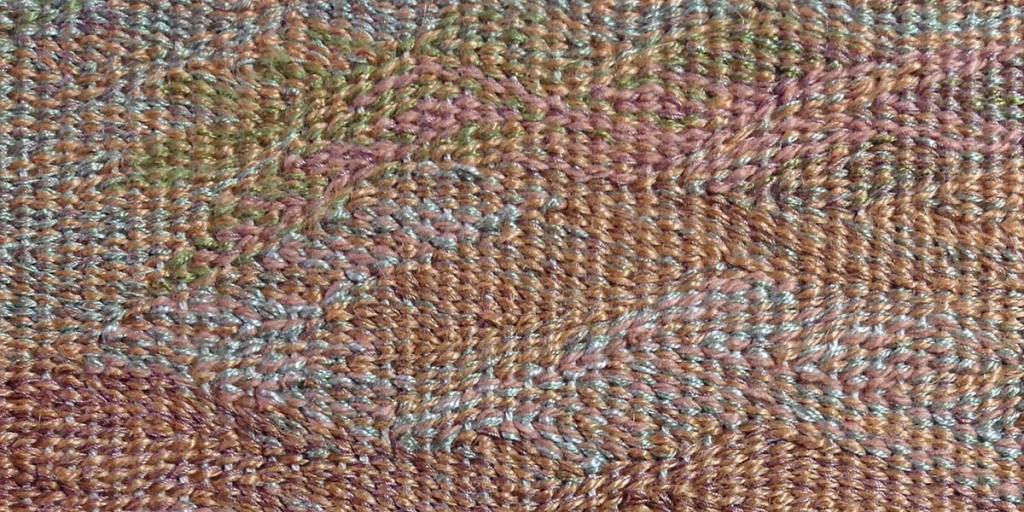
Each of our lives is a tapestry: individual threads of color, woven together to form an image of who we are, each beautiful and unique, each equally valuable. We have all done things we are not proud of, but each and every moment of our respective lives, good and bad, has led us inexorably to this moment. My life hasn’t been an uninterrupted string of successes. I was an imperfect child, who led an imperfect life, and grew into an imperfect man. But that is how it should be, and there is beauty in our faults.
I like who I am, overall. I enjoy the life I lead now. I find purpose and meaning in all I do. I am comfortable, safe, and happy. I have people close to me. I love, and I am loved. And all of this, all that I am, everything that I became, I owe to the experiences that brought me here. From the love I felt in my home growing up, to the trials, failures, and successes of my adulthood, every moment has formed a thread in a tapestry that is still being woven with each new day.
And while, perhaps, had I made my decisions differently, things might have turned out better, they might well have turned out worse. I have always believed in living without regrets for that very reason. I am who I am. And that is enough. – MK


 Michael T. Kuester
Leave a comment