Hello, dreamers.
It has now been several months since I mostly pivoted my platform away from this website to my Substack. It was a difficult decision; since I first embarked on this mission to launch a writing career, this website had been the focus of my efforts. My primary conduit to the wider world. Shifting to Substack required a lot of rethinking, which was, I think, ultimately productive. But also a lot of work. In the end, though, I determined it was necessary. Because my website was getting scraped.
For those unfamiliar with the term, scraping is the act of taking content from a website and using it to train AI, particularly Large Language Models (LLMs). Those are among the most commonly-used AI models right now; the ones that specialize in AI writing. I first grew suspicious around two years ago, when I started to notice strange trends in my web traffic. I noticed a surge in views from several countries. I write entirely in English, but these views were exclusively from non-English-speaking countries. And the vast majority of the views were focused on a handful of posts, many of which I’d written years earlier.
At first I wasn’t sure what was going on. Why would there be a sudden rush of interest in posts that had barely netted three or four views when I’d first posted them, back in the 2010s? At the time, I wasn’t yet fully aware of how, exactly, AI programmers operate. The thought that someone was stealing my work to train LLMs didn’t even cross my mind.
By this time last year, however, I was pretty sure I knew what was going on. Longtime readers will remember my “Short Fiction Retreat”, during which I stopped posting free short fiction to my site and ultimately removed every such piece I’d ever posted. It hurt; from the moment I launched my website, I’d been committed to regularly providing free fiction content to readers. I’d even had a specific page on my main menu devoted to fiction pieces. But it had to be done.
So I removed all of my short fiction. And over the past week, I’ve found this site getting scraped again. It’s the same thing as before: mass traffic from a small number of visitors, all from China (a hotbed for AI startups right now). Focused on just three posts, none of them recent.
In response, I’ve decided to remove all of my prior featured posts on this site. Past editions of “Writer’s Desk”, “Dear Sir or Madam”, and “WIP Wednesday” will remain. But all the Friday features I once posted here will be removed permanently. This website will continue its transition into serving solely as an informational resource on me as an author. I will continue to post periodic blog entries like this one. But that will be it.
To my longtime readers, I am sorry. I’d imagine at least some of you feel the same way about this that I do. But once again, AI has managed to ruin something. Which is why I’d like to close with an important note:
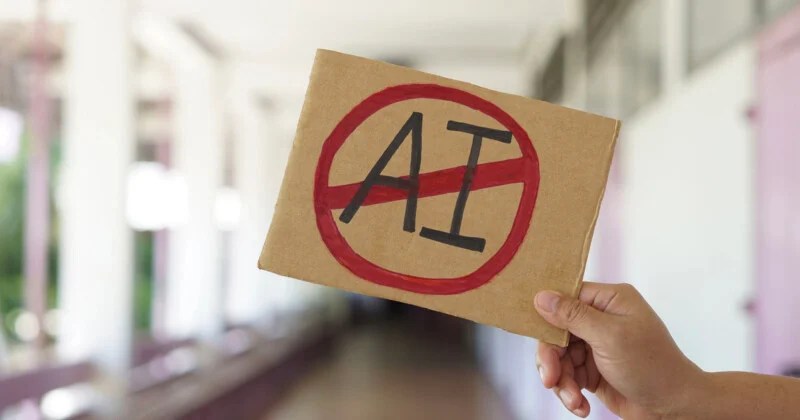
AI Is Theft
Read that line. Now read it again. Repeat it to everyone you know. Because it is true. It’s an inescapable fact that all LLMs are produced, in part, by stealing work from actual human writers. Generally, these writers are not compensated in any way. Meta, when constructing their own AI model, actually briefly considered offering to purchase rights from writers, offering royalties. In the end, their company’s leadership decided against it, determining that it was far more cost-efficient to just take whatever they wanted.
And yeah, it’s always cheaper to steal something than pay for it. But it’s also universally regarded as being wrong.
AI tends to present a friendly, approachable face. It’s almost inescapable. And on the face of it, using it doesn’t feel wrong. But before you use AI in any way, you should understand how it works, and how it’s been permitted to do what it does: its creators have stolen work from writers.
Over the past year, I’ve grown less and less worried about the prospect that AI could eventually replace human fiction authors like myself. It’s highly unlikely, at our current technological level or any we may attain in the foreseeable future, that LLMs will be capable of writing useful fiction. But fiction writers aren’t the only ones worried about AI.
Right now, the publishing industry is experiencing what some have called “The Death of Nonfiction”. While it’s incapable of creating wholly original content, AI is perfectly capable of summarizing facts in a succinct and easily-understood manner. And if you believe that’s all nonfiction is, then there’s no reason not to just leave it to AI.
But as someone who loves reading about science and history, I can tell you that just blandly stating the facts isn’t what nonfiction books are for. When you read nonfiction, you’re not just getting the facts; you’re getting the informed opinion of an expert in a field. They’ll have their own takes on what happened. They’ll offer their own opinions. AI doesn’t have opinions. Hell, it’s specifically designed not to. So by turning nonfiction over to AI, we risk losing something vitally important to history, science, art, and all other scholarly fields:
Context.
The posts I’m now removing from my site are all, essentially, works of nonfiction. My take on things, offered from my perspective as an engineer, a scientist, an author, and a lover of all things science fiction. I am taking them down because I’m not willing to let my work harm nonfiction writers simply because I, myself, don’t publish nonfiction.
So my advice is this: read more nonfiction. nonfiction by humans. You’ll learn a lot more than you will asking ChatGPT or whatever for the bland facts. And you’ll be encouraging human experts to keep putting human spins on human events and ideas.
Don’t let the robots win. – MK




Leave a comment